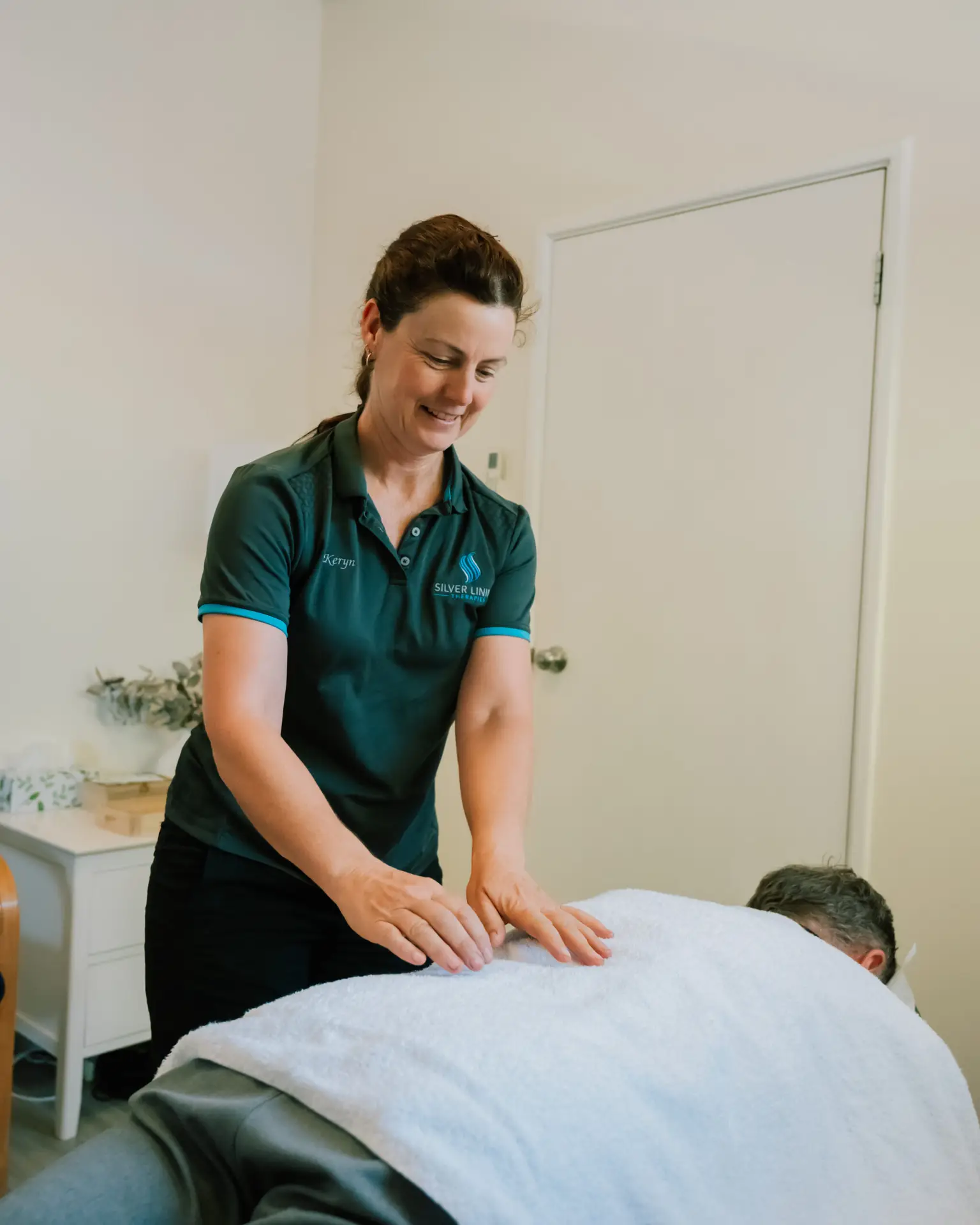
Remedial massage therapist performing deep tissue treatment at allied health clinic in Perth WA

Remedial Massage: Real Relief, Not Just a Rubdown

Remedial Massage: Real Relief, Not Just a Rubdown

You know that feeling when your shoulders have been living somewhere near your ears for the past three weeks, and “just relaxing” isn’t going to cut it? That’s where remedial massage steps in — and it’s a world apart from the softly-lit, whale-song spa treatment you might be picturing. At The Wellness Place in Bassendean, remedial massage is hands-on, evidence-backed therapy designed to sort out the aches, niggles, and stubborn tension that ordinary relaxation massage leaves untouched.

Remedial massage is a targeted, therapeutic approach that treats musculoskeletal problems at their source. Unlike a relaxation massage, which aims for general calm and stress relief, remedial massage zeroes in on specific issues — chronic pain, injury recovery, postural imbalances, and recurring headaches — using deep tissue work, trigger point therapy, and muscle stretching to restore proper function. Whether you’ve been dealing with a stubborn lower back, a sports injury that won’t quit, or tension headaches that arrive like clockwork every Friday afternoon, remedial massage Bassendean locals trust can make a genuine, measurable difference.
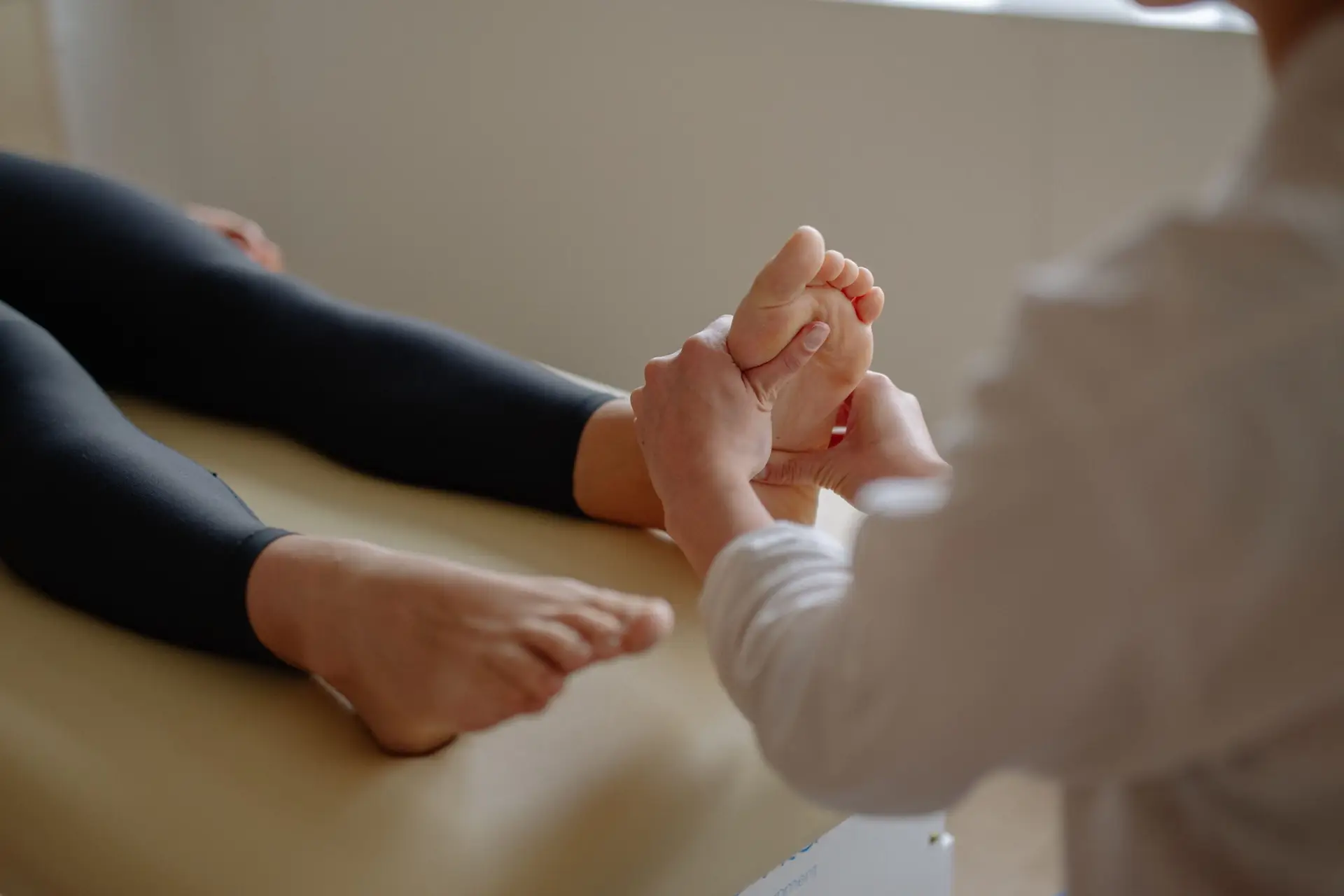
What Exactly Is Remedial Massage?

Put simply, remedial massage is treatment with a purpose. It’s a hands-on therapy that assesses and treats muscles, tendons, ligaments, and connective tissue that are causing pain or restricting movement. The word “remedial” is the giveaway — the goal is to remedy something, not just to make you feel nice for an hour (though that often happens too).

Remedial massage therapists are trained to identify the root cause of your discomfort. That knot between your shoulder blades? It might actually be driven by tightness in your chest and the front of your shoulders from hours at a desk. Your nagging lower-back pain? It could stem from tight hips and glutes that are pulling everything out of alignment. A remedial therapist doesn’t just chase the pain — they trace it back to the source.

The techniques used in a remedial session are varied and adaptable. They may include:

  • Deep tissue massage — slow, firm pressure targeting the deeper layers of muscle and connective tissue.
  • Trigger point therapy — focused pressure on specific “knots” that refer pain elsewhere (ever had a spot in your shoulder that gives you a headache? That’s a trigger point).
  • Myofascial release — gentle, sustained stretching of the fascia (the connective tissue that wraps around everything) to restore mobility.
  • Muscle stretching and mobilisation — active and passive movements to improve range of motion and flexibility.
  • Cross-fibre friction — targeted strokes across muscle fibres to break down scar tissue and adhesions.

Remedial Massage vs Relaxation Massage: What’s the Difference?

It’s a fair question, and the answer matters if you’re trying to solve an actual problem. Both involve a massage table and a therapist’s hands, but the similarities largely end there.

Relaxation Massage

Think long, flowing strokes, ambient music, and a full-body approach that’s all about winding down. Relaxation massage is designed to reduce stress, improve general circulation, and leave you feeling floaty and calm. It’s brilliant for mental wellbeing and occasional muscle tightness — but it’s not built to tackle chronic pain, recover injuries, or fix postural dysfunction.

Remedial Massage

Remedial massage starts with a question: “What’s actually going on here?” Your therapist will ask about your history, assess your posture and movement, and develop a treatment plan specific to your body. The session itself is more focused — you might spend twenty minutes on one shoulder complex rather than getting a quick once-over of the entire body. The pressure is often firmer, the pace more deliberate, and the results more lasting, because the work actually changes the state of the tissue rather than briefly soothing it.

Conditions That Remedial Massage Can Help

Remedial massage isn’t a one-trick pony. Its versatility is one of the reasons it fits so naturally into a multidisciplinary clinic like The Wellness Place. Here are some of the most common issues it addresses:

Chronic Pain and Low Back Pain

Persistent pain — especially in the lower back — is one of the most frequent reasons people seek remedial massage. The evidence backs it up: a Cochrane systematic review found that massage therapy was superior to relaxation therapy, acupuncture, and self-care education for low back pain, with improvements in both pain and function at short-term follow-up (Furlan et al., 2009). For anyone who’s spent months or years with an aching back, that’s a meaningful finding.

Tension Headaches

If you’re someone who gets those vice-like headaches that creep across your forehead and temples, remedial massage may be one of the most effective tools available. A 2020 case series published in the International Journal of Therapeutic Massage and Bodywork found that remedial massage targeting key muscles — including the sternocleidomastoid, scalenes, temporalis, and masseter — reduced chronic tension-type headache frequency below diagnostic threshold, with clinically meaningful improvements that continued even after the study ended (Espí-López et al., 2020). In plain English: patients who were getting regular, debilitating headaches stopped meeting the criteria for a chronic headache condition.

Sports Recovery and Injury Rehabilitation

Whether you’re a weekend warrior or a serious athlete, remedial massage can speed up recovery and reduce the risk of re-injury. Research published in Scandinavian Journal of Medicine & Science in Sports demonstrated that massage attenuated exercise-induced muscle damage symptoms, including impairments in muscle strength, joint position sense, balance, and postural sway — particularly in older individuals (Roberts et al., 2020). By improving circulation, reducing inflammation, and breaking down adhesions in overworked muscles, remedial massage helps you get back to doing what you love sooner.

Postural Issues and Desk-Related Strain

The modern workday is not kind to the human body. Hours spent hunched over screens create predictable patterns of tightness — rounded shoulders, forward head posture, and a weakened upper back. Remedial massage directly addresses these imbalances by releasing tight chest and neck muscles while encouraging activation of the opposing muscle groups that have gone to sleep. Combined with advice on stretches and ergonomic adjustments, it’s a practical solution to a very modern problem.

What to Expect During a Remedial Massage Session at The Wellness Place

If you’ve never had a remedial massage before, knowing how it unfolds can take the edge off any uncertainty. Every session at TWP is built around you — there’s no conveyor belt here.

Before You Get on the Table

Your therapist will start with a conversation — what’s bothering you, how long it’s been there, what makes it better or worse, and any relevant medical history. Then comes a physical assessment. Don’t be surprised if you’re asked to stand, walk, or do simple movements — this helps your therapist see how your body moves as a whole and identify compensations that might be feeding the problem.

During the Treatment

The massage itself is collaborative. Your therapist will explain what they’re doing and why, and they’ll check in about pressure — remedial massage uses firm, directed pressure, but it should never be unbearable. Communication is key. The work may focus on areas that don’t intuitively feel like the problem (treating your chest and neck for shoulder pain, for example), and your therapist will explain the connection.

You’ll typically undress to your level of comfort — most people leave underwear on — and you’ll be draped with towels or sheets throughout, with only the area being worked on exposed at any time.

After Your Session

It’s common to feel a little tender in the days following a remedial massage, similar to post-workout soreness. Your therapist will likely give you simple stretches or self-care tips to extend the benefits between sessions. Drink plenty of water, and know that the real relief often builds over the 24-48 hours after treatment as your muscles settle into their new, less grumpy state.

How Remedial Massage Works Alongside Other Therapies

One of the things that makes The Wellness Place special is that remedial massage doesn’t happen in isolation. Our therapists work alongside chiropractors, physiotherapists, podiatrists, exercise physiologists, and other allied health practitioners under the same roof. This means your remedial massage therapist can — with your consent — communicate with your chiro about joint restrictions they’ve noticed, or your physio can flag specific muscle groups that need attention.

For example, someone seeing a podiatrist for foot pain might have tight calves and hamstrings contributing to the problem — remedial massage addresses that soft-tissue component while the podiatrist handles the biomechanical side. A patient undergoing physio for a shoulder injury might find that massage accelerates their progress by keeping surrounding muscles loose and functional. It’s a team approach, and you’re at the centre of it.

Is Remedial Massage Right for You?

If you’re dealing with pain that won’t shift, tension that feels structural rather than fleeting, or an injury that’s taking too long to resolve, remedial massage is a solid, evidence-backed option. A 2024 systematic review published in JAMA Network Open mapped the evidence for massage therapy across a wide range of painful conditions — from chronic low back and neck pain to fibromyalgia and plantar fasciitis — and found consistent support for its use (Mak et al., 2024).

You don’t need a referral to book in, and you don’t need to have a diagnosed condition. Sometimes the best reason to come in is simply that your body has been telling you something isn’t right, and you’re ready to listen.

Ready to Book?

Remedial massage at The Wellness Place isn’t about fancy oils and generic routines — it’s about genuine, hands-on treatment that gets results. Whether it’s a niggling back, recurring headaches, or just the accumulated weight of everyday stress sitting in your shoulders, our therapists will work with you to create a plan that actually helps.

Give us a call on (08) 9379 3838 or drop by the clinic at 103 Old Perth Road, Bassendean to chat with our friendly team about booking your first session. Your shoulders will thank you.

References

  1. Espí-López GV, Ruescas-Nicolau MA, Campos-Hernández AM, et al. Remedial Massage Therapy Interventions Including and Excluding Sternocleidomastoid, Scalene, Temporalis, and Masseter Muscles for Chronic Tension Type Headaches: a Case Series. Int J Ther Massage Bodywork. 2020;13(1):4-17.
  2. Furlan AD, Imamura M, Dryden T, Irvin E. Massage for low back pain: an updated systematic review within the framework of the Cochrane Back Review Group. Spine. 2009;34(16):1669-1684.
  3. Mak S, Allen J, Morshed AB, et al. Use of Massage Therapy for Pain, 2018-2023: A Systematic Review. JAMA Netw Open. 2024;7(7):e2422254.
Podiatry consultation at The Wellness Place in Bassendean

Little Feet, Big Questions: A Parent’s Guide to Children’s Podiatry

Little Feet, Big Questions: A Parent’s Guide to Children’s Podiatry

Watching your child tear across the playground, you notice their feet turn in a little. Or maybe they’ve started complaining about sore heels after soccer. Should you worry — or is it just “one of those kid things”? If you’ve ever found yourself googling foot concerns at 10pm, you’re not alone. Finding a trusted children’s podiatrist in Bassendean can take the guesswork out of those moments and give you peace of mind.

Kids’ feet go through an incredible transformation from those chubby newborn toes to the arches and angles that carry them through life. Along the way, plenty of things can look — or feel — a bit off. This guide walks you through the most common children’s foot issues, what’s normal development and what warrants a closer look, and how our team at The Wellness Place makes sure even the wriggliest little patients feel safe, heard and comfortable.

How children’s feet grow: what’s normal and what’s not

Children’s feet aren’t just miniature adult feet. They’re softer, more flexible, and packed with cartilage that gradually turns to bone over nearly two decades. In fact, a child’s arch doesn’t fully develop until around age 6–8, and foot bones keep maturing well into the teenage years. This means a lot of what looks “concerning” at age three is simply a foot that hasn’t finished the job yet.

Here’s a rough timeline of what to expect:

  • Birth to 2 years: Flat feet are universal — a fatty pad fills the arch area, making every toddler look flat-footed. This is completely normal.
  • 2 to 4 years: The arch starts emerging, but walking patterns can still look awkward. Toe-walking and a wide-based gait are common.
  • 5 to 8 years: Arch development accelerates. Most in-toeing resolves naturally by this stage. Heel bones are still growing (growth plates remain open).
  • 9 to 14 years: The foot is structurally more “adult-like,” but rapid growth spurts can trigger growing pains and conditions like Sever’s disease.

Common kids’ foot issues — and when a children’s podiatrist in Bassendean can help

Not every quirk needs treatment. But some do. Here are the conditions we see most often at The Wellness Place, and how to tell the difference.

Flat feet (pes planus)

Almost all toddlers have flat feet, so if your three-year-old’s footprint looks like a pancake, breathe easy. The Australian College of General Practitioners notes that flexible flat feet — where an arch appears when the child stands on tiptoes but disappears when standing flat — are usually part of normal development and don’t need treatment unless they’re painful.

When to see a podiatrist: If your child complains of foot or leg pain, tires quickly when walking, or if flat feet persist beyond age 8–10 with no arch appearing even on tiptoe (rigid flat feet), it’s worth an assessment. Our podiatrists can check biomechanics, recommend supportive footwear, and prescribe custom orthotics if needed — but we’ll never “treat” a happy, pain-free flat foot.

In-toeing (pigeon toes)

When a child walks with their toes pointing inward, it’s called in-toeing — and it’s one of the most common reasons parents book an appointment. The good news: most in-toeing corrects itself. Internal tibial torsion (where the shin bone twists inward) typically resolves by age 6, while femoral anteversion (thigh bone twist) can take until age 8–10 to straighten.

When to see a podiatrist: If in-toeing is still prominent after age 8, causes frequent tripping or falls, is only on one side, or your child complains of pain — it’s time for a proper biomechanical assessment. Early intervention with exercises, footwear guidance, or orthotics can make a world of difference.

Growing pains

That vague, aching leg pain that wakes kids up at night? Growing pains are real — and surprisingly common between ages 3 and 12. They’re thought to result from muscles and bones growing at slightly different rates, creating tension. While classic growing pains (both legs, evening/night-time, no limp) aren’t dangerous, they can be distressing.

When to see a podiatrist: If the pain is consistently in one leg only, associated with a limp, happens during activity rather than at night, or is accompanied by swelling or redness — these are red flags that go beyond benign growing pains. A podiatrist can assess gait, muscle tightness, and biomechanics, then prescribe stretches, footwear changes, or orthotics to ease the strain.

Sever’s disease (calcaneal apophysitis)

Despite the scary name, Sever’s disease isn’t a disease at all — it’s an overuse injury of the growth plate in the heel, and it’s the most common cause of heel pain in active kids aged 8–14. Think of it as “growing pains with a specific address.” The Achilles tendon pulls repeatedly on the still-soft growth plate at the back of the heel, especially during running and jumping sports, causing inflammation and pain.

A 2025 randomised clinical trial published in a leading orthopaedic journal found that a combination of heel raises and supervised eccentric heel-drop exercises significantly outperformed “wait and see” for reducing pain and returning kids to sport. At The Wellness Place, Aaron Gregory — our sports podiatrist — sees Sever’s regularly and typically manages it with a mix of activity modification, heel-lift inserts, calf stretches, and strengthening exercises. Most kids are back to their sport within weeks.

Plantar warts (verrucae)

Warts on the soles of the feet are caused by the human papillomavirus (HPV) and thrive in warm, moist environments — think swimming pool change rooms and shared showers. They can be painful when standing or walking, and without treatment they can linger for a year or more and spread to other parts of the foot.

When to see a podiatrist: Over-the-counter wart treatments are often too harsh for young skin and can damage healthy tissue. Our podiatrists use gentle, child-friendly approaches — from topical treatments applied under occlusion to more advanced options for stubborn warts — always prioritising comfort and minimal downtime.

How The Wellness Place makes children comfortable

We get it — a clinical setting can feel intimidating for a child. That’s why our approach at The Wellness Place is deliberately warm and unhurried. Aaron Gregory brings not only his expertise in sports and paediatric podiatry but also a genuine rapport with young patients. From chatting about their favourite sport to demonstrating stretches they can do at home, every appointment is tailored to the child in front of us.

We also know parents need clarity. You’ll leave every appointment with a plain-English explanation of what’s going on, whether treatment is needed, and what you can do at home to support healthy foot development. No jargon, no rush, no unnecessary intervention.

What to expect at your child’s first podiatry visit

For most children, a podiatry assessment is actually pretty fun. Here’s what typically happens:

  • Chat and history: We’ll ask about your concerns, your child’s activity levels, any pain patterns, and developmental milestones.
  • Gait assessment: We’ll watch your child walk (and sometimes run) — often just up and down the corridor. Kids usually enjoy showing off!
  • Physical exam: A gentle, non-invasive check of foot structure, joint range of motion, muscle strength, and footwear fit.
  • Plan: You’ll get a clear summary of findings and a collaborative plan — whether that’s reassurance and monitoring, stretches and exercises, footwear advice, or orthotic therapy.

When to book an appointment

Not every wobbly walk needs a podiatrist. But if any of these ring a bell, it’s worth a visit:

  • Your child frequently complains of foot, heel, or leg pain
  • You notice uneven shoe wear, limping, or frequent tripping
  • In-toeing or flat feet persist beyond age 8
  • Your child avoids sport or physical play due to discomfort
  • Warts or skin issues on the feet aren’t resolving
  • You just want peace of mind — and that’s reason enough

At The Wellness Place, we see children of all ages across Bassendean and Perth’s eastern suburbs. Whether it’s a niggling worry or a specific problem, we’d love to help your child put their best foot forward — literally.

Book an appointment with our children’s podiatry team at The Wellness Place. Call us on (08) 9379 3838 or visit thewellnessplace.com.au to schedule online. We’re located at 103 Old Perth Road, Bassendean.

References

  1. Evans AM. The flat-footed child — to treat or not to treat: what is the clinician to do? J Paediatr Child Health. 2008;44(10):546-551. doi:10.1111/j.1440-1754.2008.01373.x — A pragmatic, evidence-based “traffic light” framework for paediatric flatfoot from the University of South Australia.
  2. Wiegerinck JI, Zwiers R, Sierevelt IN, van Dijk CN. Comparison of treatment options for calcaneal apophysitis: a randomised clinical trial. Orthop J Sports Med. 2025. — Demonstrates that heel raises plus eccentric exercises outperform “wait and see” for Sever’s disease in children aged 8–15.
  3. The Royal Australian College of General Practitioners. A guide to the management of paediatric pes planus. Aust J Gen Pract. 2020. Available at: racgp.org.au — Clinical guidance distinguishing flexible vs rigid flat feet and appropriate management pathways.
Podiatry consultation at The Wellness Place in Bassendean

Ingrown Toenails: Why That “Quick Fix” Can Make Everything Worse

Ingrown Toenails: Why That “Quick Fix” Can Make Everything Worse

You know the feeling — that sharp, throbbing pain every time your toe nudges the inside of your shoe. An ingrown toenail starts as a minor annoyance and can spiral into something that makes walking, exercising, or even wearing socks genuinely miserable.

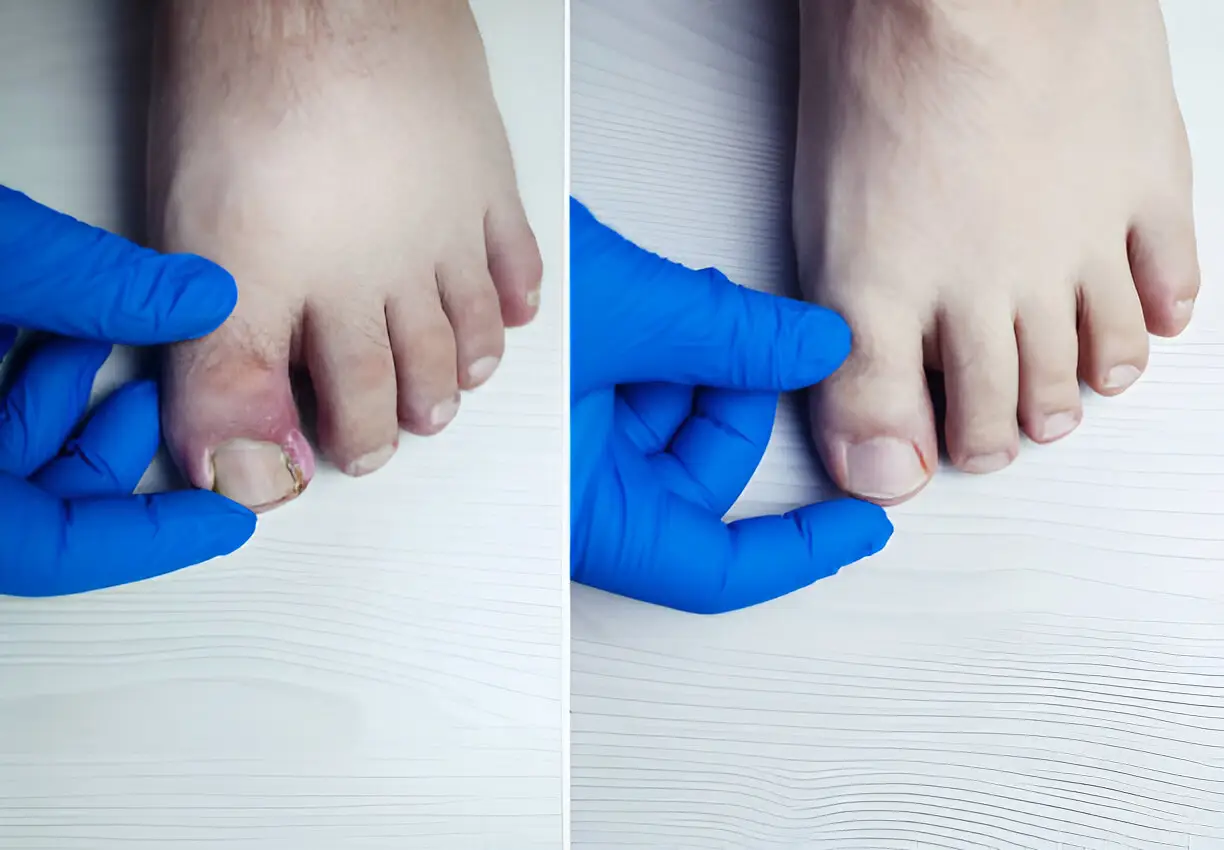
If you’re searching for effective ingrown toenail treatment in Bassendean, you’re in the right place. At The Wellness Place, our podiatry team — led by sports podiatrist Aaron Gregory — sees ingrown toenails every single week. And here’s the thing: most people come in after trying to fix it themselves first, which almost always makes the problem worse. Let’s walk through what’s really going on, why your bathroom surgery needs to stop, and how we get you out of pain — often in a single appointment.

What Actually Causes an Ingrown Toenail?

An ingrown toenail — known medically as onychocryptosis — happens when the edge or corner of your nail grows into the surrounding skin instead of straight over it. It almost always affects the big toe, though any toe can be involved, and it’s particularly common in teenagers and young adults.

The usual suspects behind ingrown toenails include:

  • Improper trimming: Cutting nails too short or rounding the corners — the number one cause we see at the clinic.
  • Tight footwear: Shoes that squeeze your toes together, especially narrow dress shoes or poorly fitted runners.
  • Trauma: Stubbing your toe, dropping something on it, or even repetitive pressure from sports like soccer or running.
  • Genetics: Some people are simply born with more curved or involuted nails that are naturally prone to digging in.
  • Poor foot hygiene or excessive sweating: Softens the surrounding skin, making it easier for the nail to penetrate.

Once that nail edge breaches the skin, it’s not just pain you’re dealing with — your body treats it as a foreign object. Inflammation kicks in, and if bacteria join the party, you’ve got yourself an infection that needs proper medical attention.

Why DIY Ingrown Toenail Removal Is a Terrible Idea

We get it. That nail is hurting, and it’s tempting to grab the nail clippers — or worse, scissors, a pocket knife, or whatever’s in the bathroom drawer — and dig it out yourself. It feels like you’re solving the problem. You’re not.

The Infection Risk Is Real

Non-sterile household tools introduce bacteria directly into broken skin. If the area is already red, swollen, warm, or oozing — and you cut into it — you’ve just opened the door to a deeper infection. What could have been a simple in-chair fix now potentially needs antibiotics alongside treatment. For people with diabetes or poor circulation, the consequences can be far more serious.

You’ll Probably Make It Worse

Most people don’t actually remove the offending nail spicule — they just cut the visible corner. The sharp bit that’s actually piercing your skin remains buried, and cutting the nail back further often creates a new sharp edge. The nail regrows and digs in again, sometimes deeper than before. This is why we see people who have been “managing” their ingrown toenail for months — when we could have fixed it permanently in under an hour.

Home “Remedies” That Backfire

Soaking your foot in warm salty water can temporarily soothe mild irritation. But if you’ve already broken the skin, moisture combined with a warm, enclosed shoe creates the perfect environment for bacteria to thrive. And that old trick of cutting a V-shaped notch in the nail? It doesn’t work — it’s a myth. The nail doesn’t “grow toward the centre” because you cut the middle.

How a Podiatrist Treats Ingrown Toenails

This is where things get dramatically better. When you come into The Wellness Place for ingrown toenail treatment in Bassendean, Aaron assesses the severity and talks you through the options — no judgement, just a plan.

Conservative Treatment (Mild Cases)

If the nail is only mildly ingrown and there’s no significant infection, conservative care often works well:

  • Nail packing: A tiny piece of sterile cotton or dental floss is placed under the nail edge to gently lift it away from the skin so it can grow out properly.
  • Proper trimming education: Aaron shows you exactly how to cut your nails — straight across, not curved, leaving the corners visible above the skin.
  • Antibiotics or antiseptic dressings: If there’s a mild infection, we address that alongside the mechanical fix.
  • Taping techniques: Pulling the skin away from the nail edge to reduce pressure while the nail grows out.

For many people, this is all it takes — especially when caught early.

Partial Nail Avulsion with Phenolisation (The Permanent Fix)

For recurrent or moderately-to-severely ingrown toenails, there’s a procedure that solves the problem definitively. It’s called a partial nail avulsion (PNA) with chemical matrixectomy, and it’s the gold standard in ingrown toenail surgery.

Here’s how it works:

  • The toe is numbed with local anaesthetic — you’re awake, but you feel nothing.
  • Aaron removes a narrow strip of nail (usually 3–4mm) from the offending side, tracing all the way back to the nail matrix.
  • The matrix — the nail’s “root” where growth happens — is treated with phenol, a chemical that prevents regrowth of that specific section.
  • The result: the problematic strip of nail never grows back, but the rest of the nail looks completely normal — just slightly narrower.

The research backs this up strongly. A 2012 Cochrane review found that surgical interventions are significantly better than non-surgical approaches at preventing recurrence, and adding chemical matrix ablation (phenol) to the surgery substantially reduces the chance of the nail growing back inwards. Long-term studies report success rates above 95% with the phenolisation technique.

Recovery is straightforward — most people are back in regular shoes within a week, and the toe heals beautifully with minimal scarring. Aaron performs this procedure regularly at The Wellness Place, and patients routinely tell us they wish they’d done it years earlier.

Preventing Ingrown Toenails in the First Place

Whether you’ve had an ingrown toenail before or you’d simply rather not, a few habits make all the difference:

  • Cut nails straight across: Never round the corners or cut them too short. The white tip of the nail should still be visible above the skin.
  • Wear shoes that fit: There should be a thumb’s width of space between your longest toe and the end of the shoe. The toe box shouldn’t squeeze your toes together.
  • Keep feet clean and dry: Good hygiene prevents the skin from softening and becoming vulnerable.
  • Don’t pick or tear nails: It creates uneven, jagged edges that are more likely to pierce the skin.
  • If you have diabetes or circulation issues: Don’t attempt any self-treatment — see a podiatrist at the first sign of trouble. Your risk of complications is significantly higher.

When to Come See Us

You don’t need to wait until you’re limping. Book an appointment with Aaron at The Wellness Place if:

  • The pain is stopping you from wearing shoes comfortably.
  • You see redness, swelling, or pus around the nail.
  • You’ve had the same nail become ingrown more than once.
  • You have diabetes, neuropathy, or poor circulation.
  • You’ve tried home care and it’s not getting better within a few days.

We’re at 103 Old Perth Road, Bassendean, and you can book your podiatry appointment by calling us on (08) 9379 3838. Most ingrown toenails are sorted in one visit — and you’ll walk out genuinely relieved.


References:

  1. Eekhof JA, Van Wijk B, Knuistingh Neven A, et al. Interventions for ingrowing toenails. Cochrane Database of Systematic Reviews. 2012;(4):CD001541.
  2. Ozan F, Doğar F, Altay T, et al. Treatment of Ingrown Toenail With Proximolateral Matrix Partial Excision and Phenol Ablation. Journal of the American Podiatric Medical Association. 2012;102(2):130-136.
  3. American College of Foot and Ankle Surgeons. Ingrown Toenail: Causes, Symptoms, and Treatment. FootHealthFacts.org. 2024.
Podiatry consultation at The Wellness Place in Bassendean

Custom Orthotics at The Wellness Place Bassendean: Personalised Support for Every Step

Custom Orthotics at The Wellness Place Bassendean: Personalised Support for Every Step

Your feet carry you through every single day — so why do so many of us wait until they hurt to pay them any attention? At The Wellness Place in Bassendean, we believe your feet deserve better than a one-size-fits-all solution.

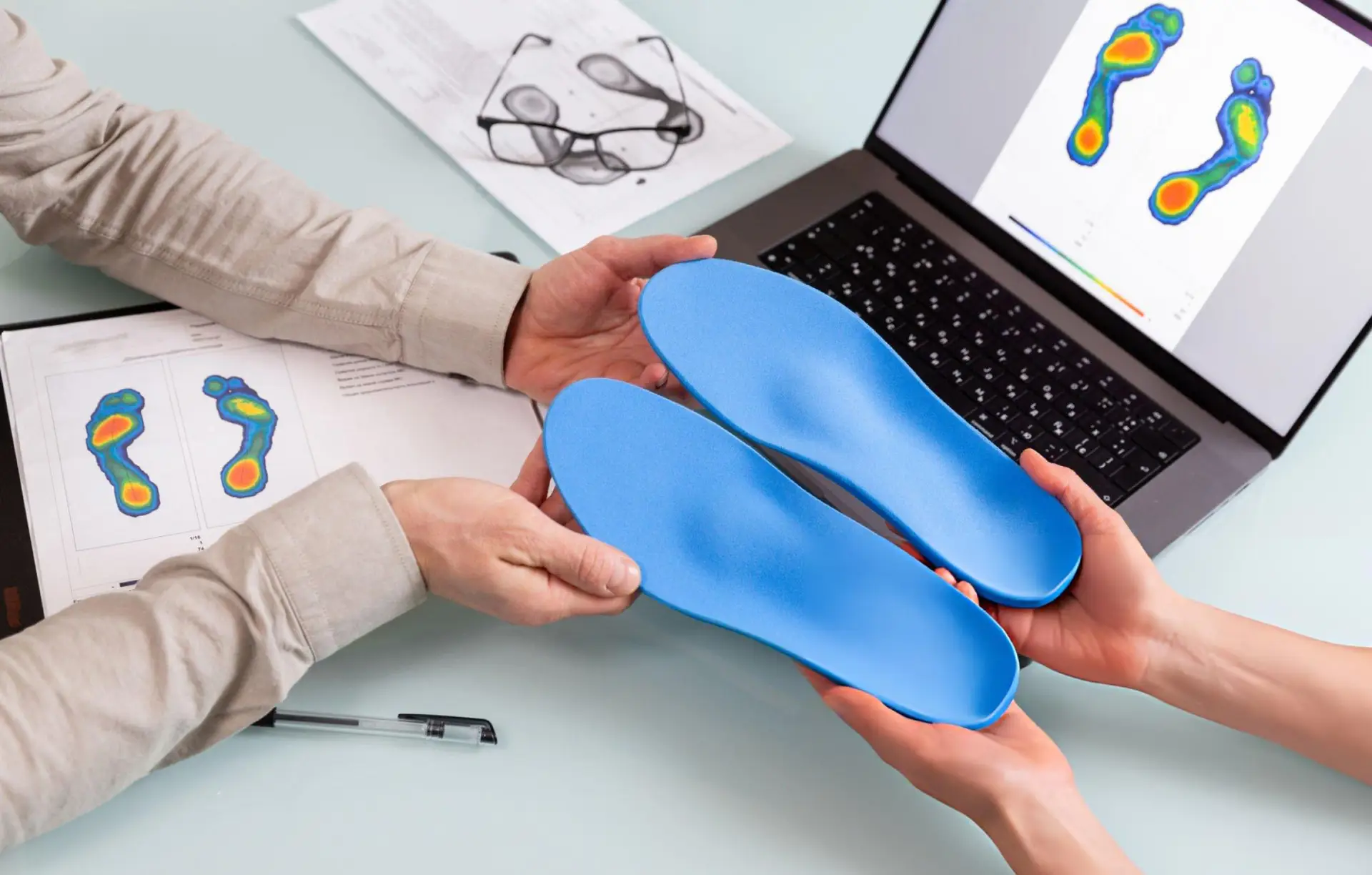
If you’ve been dealing with persistent foot pain, shin splints that won’t quit, or that nagging lower back ache that flares up after a long shift, custom orthotics Bassendean might just be the answer you haven’t tried yet. Unlike the gel inserts you grab at the chemist, custom orthotics are designed around your feet, your stride, and your life — not a generic mould of someone else’s.

Why Choose Custom Orthotics in Bassendean?

Custom orthotics are medical-grade shoe inserts prescribed by a podiatrist and individually fabricated to match the unique structure and movement patterns of your feet. Think of them as prescription glasses for your gait — they don’t just cushion, they correct.

More Than Just an Insole

A proper custom orthotic does more than make your shoes feel comfier. It works by redistributing pressure across your foot, supporting your arches, and guiding your heel and ankle into a more biomechanically efficient position. The ripple effect? Better alignment all the way up — ankles, knees, hips, and even your lower back can feel the difference.

Research backs this up, too. A 2023 review published in the journal PMC found that custom foot orthoses, created from a 3D scan or weightbearing impression of the patient’s foot, are specifically designed to accommodate individual foot anatomy — something no off-the-shelf insole can genuinely claim1. Meanwhile, a 2025 prospective cohort study demonstrated that custom 3D-printed orthotics significantly shifted plantar pressure to the midfoot and reduced peak pressure at the heel, leading to measurable improvements in comfort and foot function2.

How We Make Your Custom Orthotics

At The Wellness Place, we don’t believe in guesswork. Every pair of custom orthotics we prescribe goes through a thorough, technology-driven process that leaves nothing to chance.

Step 1: Your Gait Analysis & 3D Foot Scan

Your journey starts with a comprehensive assessment. Aaron Gregory, our sports podiatrist, will sit down with you to understand your lifestyle, symptoms, and goals — whether that’s running a marathon pain-free or simply getting through a workday without aching feet.

From there, we use advanced 3D scanning technology to capture thousands of data points from your feet in a matter of seconds. No messy plaster casts, no awkward foam boxes — just a precise digital map of every arch, contour, and pressure point. Combined with a dynamic gait analysis — where we watch and measure how you actually walk and run — we build a complete picture of what your feet need.

Step 2: Precision Manufacturing

Your digital scan and prescription are sent to a specialist orthotics laboratory, where skilled technicians fabricate your orthotics from high-quality materials selected specifically for your needs — whether that’s a firmer shell for structural correction or cushioning layers for high-impact activities. Modern labs use CAD/CAM technology to mill or 3D-print each pair with sub-millimetre accuracy.

Step 3: Fitting & Fine-Tuning

Once your orthotics arrive back at the clinic, we don’t just hand them over and wish you luck. Aaron checks the fit in your footwear, watches you walk with them in place, and makes any adjustments needed. You’ll also get clear advice on how to break them in gradually — because your feet need time to adapt to being properly supported. A follow-up review ensures everything is working exactly as it should.

Who Benefits from Custom Orthotics?

The short answer? Almost anyone. But here are three groups we see most often at our Bassendean clinic.

Runners & Active Lifestyles

If you log kilometres on pavement or trail, your feet absorb forces up to three times your body weight with every stride. Custom orthotics help manage that load efficiently, reducing the risk of common overuse injuries like plantar fasciitis, shin splints, and Achilles tendinopathy. Aaron knows this world inside out — he’s a competitive runner himself, having competed in State Athletics for over a decade and represented Australia at the World Cross Country Championships.

Kids & Growing Feet

Children’s feet aren’t just miniature adult feet — they’re still developing. Issues like flat feet, in-toeing, or growing pains can often be addressed early with properly prescribed orthotics, potentially preventing problems that would otherwise follow them into adulthood. Aaron has a special interest in paediatric and adolescent foot health, making The Wellness Place a trusted choice for families across Bassendean and beyond.

Workers on Their Feet All Day

Nurses pulling 12-hour shifts. Teachers who barely sit down between 9 and 3. Retail and hospitality staff on hard concrete floors. If your job keeps you standing, your feet are taking a beating — and custom orthotics can make a genuine difference. By improving weight distribution and reducing fatigue, they help you finish your shift with more energy and less pain.

Custom vs Off-the-Shelf: What’s the Difference?

It’s a fair question — especially when you can grab a pair of insoles from the pharmacy for $30. Here’s the honest breakdown.

Off-the-shelf orthotics (or prefabricated insoles) are mass-produced to a generic foot shape. They can provide some cushioning and mild arch support, and they may be a reasonable first step for very mild, generalised discomfort. Some studies have even found them comparable to custom orthotics for certain conditions like mild plantar fasciitis3.

However, where they fall short is in specificity. They can’t correct for the unique way your foot pronates (rolls inward) or supinates (rolls outward). They can’t accommodate a leg-length discrepancy or offload a particular pressure point that’s causing you grief. Custom orthotics are prescribed to address your individual biomechanics — and when the problem is structural, that precision matters.

Think of it this way: reading glasses from the chemist might help in a pinch, but if you’ve got a complex prescription, you go to an optometrist. Your feet deserve the same level of care.

Meet Aaron Gregory — Your Sports Podiatrist

You don’t want just anyone looking after your feet. Aaron Gregory brings a rare combination of clinical expertise and firsthand athletic experience to every consultation at The Wellness Place.

A former competitive runner who represented Australia at the World Cross Country Championships, Aaron knows what it’s like to push your body — and what it takes to keep it functioning at its best. His areas of interest include sporting injuries, biomechanics, paediatric and adolescent foot health, nail procedures, and clinical podiatry. He’s also, in his own words, a “footwear enthusiast” — so if you need advice on the right shoes to pair with your new orthotics, you’re in good hands.

What to Expect: Timeline & Investment

From your first appointment to walking out with your finished orthotics, the process typically takes around 2 to 3 weeks. Here’s how it generally flows:

  • Initial consultation & scanning: One 45–60 minute appointment where Aaron assesses your feet, captures your 3D scan, and discusses your prescription.
  • Manufacturing: Your orthotics are fabricated by a specialist lab — this usually takes 1–2 weeks.
  • Fitting appointment: A shorter session to check the fit, make any adjustments, and give you your wear-in plan.
  • Follow-up review: 2–4 weeks later, we check in to make sure everything’s tracking well.

As for cost, custom orthotics are an investment in your long-term foot health. Prices vary depending on the complexity of your prescription and the materials used. Aaron will provide a clear quote at your initial consultation — no surprises, no hidden extras. Many private health funds provide rebates for custom orthotics under podiatry extras cover, and we can help you check what you’re entitled to.

Ready to Take the First Step?

You don’t have to live with foot pain. Whether you’re a runner chasing a PB, a parent worried about your child’s gait, or someone who simply wants to get through the workday without sore feet, custom orthotics could be the game-changer you’ve been looking for.

At The Wellness Place, we’re proud to serve the Bassendean community with genuine, personalised care — and we’d love to help you move better.

Call us on (08) 9379 3838 to book your initial consultation with Aaron Gregory, or visit us at 103 Old Perth Road, Bassendean. You can also book online at thewellnessplace.com.au.

Your feet work hard for you. It’s time to return the favour.


References:

  1. Comparing the Utility of Custom Foot Orthoses vs Prescription-grade Prefabricated Foot Orthoses. PMC, 2023. View source.
  2. Clinical Evaluation of Novel Custom 3D-Printed Meshed-Silicone Orthoses. PMC, 2025. View source.
  3. Custom-Made Foot Orthoses versus Prefabricated Foot Orthoses: A Review of Clinical Effectiveness and Cost-Effectiveness. CADTH/NCBI Bookshelf, 2019. View source.