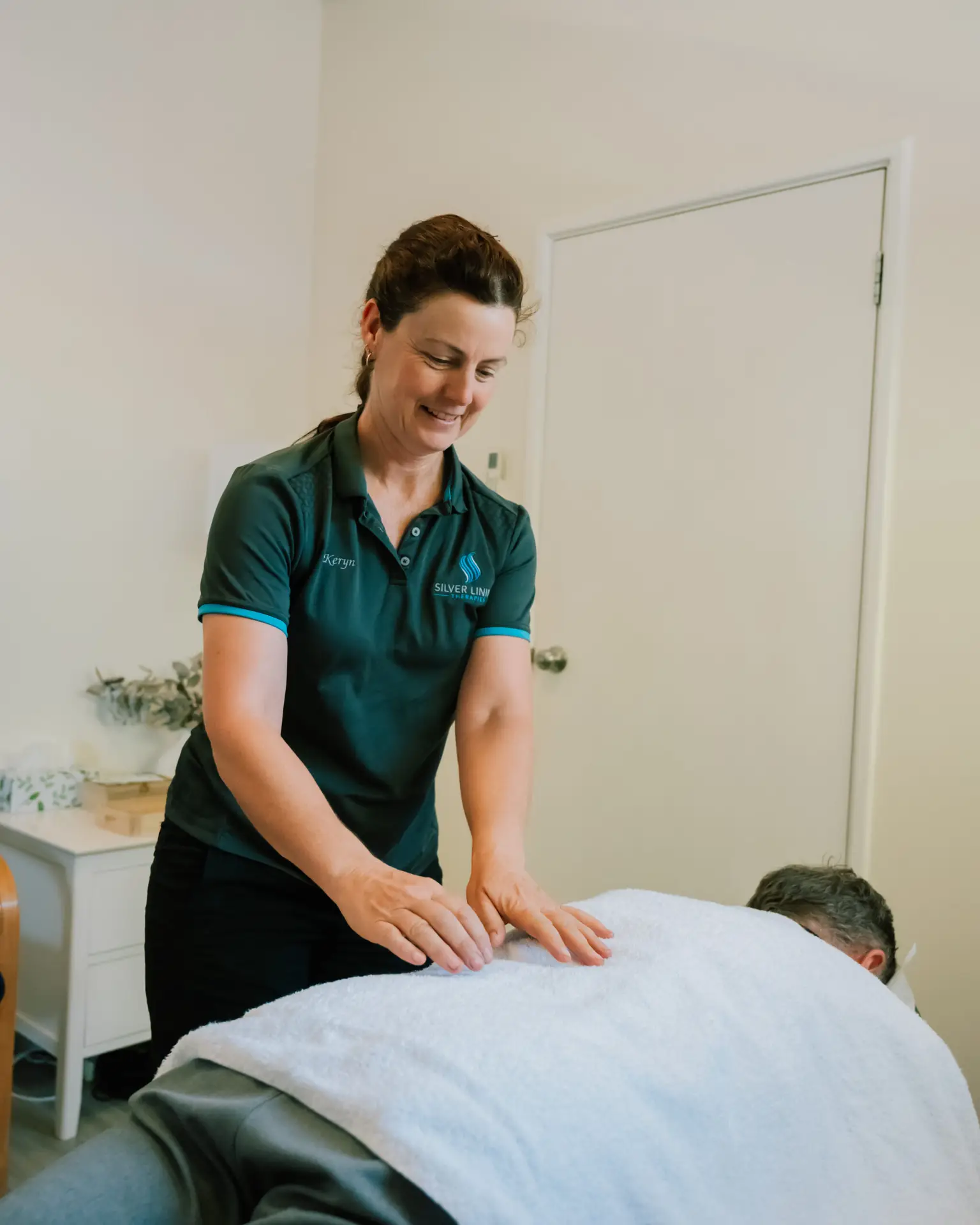
Remedial massage therapist performing deep tissue treatment at allied health clinic in Perth WA

Remedial Massage: Real Relief, Not Just a Rubdown

Remedial Massage: Real Relief, Not Just a Rubdown

You know that feeling when your shoulders have been living somewhere near your ears for the past three weeks, and “just relaxing” isn’t going to cut it? That’s where remedial massage steps in — and it’s a world apart from the softly-lit, whale-song spa treatment you might be picturing. At The Wellness Place in Bassendean, remedial massage is hands-on, evidence-backed therapy designed to sort out the aches, niggles, and stubborn tension that ordinary relaxation massage leaves untouched.

Remedial massage is a targeted, therapeutic approach that treats musculoskeletal problems at their source. Unlike a relaxation massage, which aims for general calm and stress relief, remedial massage zeroes in on specific issues — chronic pain, injury recovery, postural imbalances, and recurring headaches — using deep tissue work, trigger point therapy, and muscle stretching to restore proper function. Whether you’ve been dealing with a stubborn lower back, a sports injury that won’t quit, or tension headaches that arrive like clockwork every Friday afternoon, remedial massage Bassendean locals trust can make a genuine, measurable difference.

What Exactly Is Remedial Massage?

Put simply, remedial massage is treatment with a purpose. It’s a hands-on therapy that assesses and treats muscles, tendons, ligaments, and connective tissue that are causing pain or restricting movement. The word “remedial” is the giveaway — the goal is to remedy something, not just to make you feel nice for an hour (though that often happens too).

Remedial massage therapists are trained to identify the root cause of your discomfort. That knot between your shoulder blades? It might actually be driven by tightness in your chest and the front of your shoulders from hours at a desk. Your nagging lower-back pain? It could stem from tight hips and glutes that are pulling everything out of alignment. A remedial therapist doesn’t just chase the pain — they trace it back to the source.

The techniques used in a remedial session are varied and adaptable. They may include:

  • Deep tissue massage — slow, firm pressure targeting the deeper layers of muscle and connective tissue.
  • Trigger point therapy — focused pressure on specific “knots” that refer pain elsewhere (ever had a spot in your shoulder that gives you a headache? That’s a trigger point).
  • Myofascial release — gentle, sustained stretching of the fascia (the connective tissue that wraps around everything) to restore mobility.
  • Muscle stretching and mobilisation — active and passive movements to improve range of motion and flexibility.
  • Cross-fibre friction — targeted strokes across muscle fibres to break down scar tissue and adhesions.

Remedial Massage vs Relaxation Massage: What’s the Difference?

It’s a fair question, and the answer matters if you’re trying to solve an actual problem. Both involve a massage table and a therapist’s hands, but the similarities largely end there.

Relaxation Massage

Think long, flowing strokes, ambient music, and a full-body approach that’s all about winding down. Relaxation massage is designed to reduce stress, improve general circulation, and leave you feeling floaty and calm. It’s brilliant for mental wellbeing and occasional muscle tightness — but it’s not built to tackle chronic pain, recover injuries, or fix postural dysfunction.

Remedial Massage

Remedial massage starts with a question: “What’s actually going on here?” Your therapist will ask about your history, assess your posture and movement, and develop a treatment plan specific to your body. The session itself is more focused — you might spend twenty minutes on one shoulder complex rather than getting a quick once-over of the entire body. The pressure is often firmer, the pace more deliberate, and the results more lasting, because the work actually changes the state of the tissue rather than briefly soothing it.

Conditions That Remedial Massage Can Help

Remedial massage isn’t a one-trick pony. Its versatility is one of the reasons it fits so naturally into a multidisciplinary clinic like The Wellness Place. Here are some of the most common issues it addresses:

Chronic Pain and Low Back Pain

Persistent pain — especially in the lower back — is one of the most frequent reasons people seek remedial massage. The evidence backs it up: a Cochrane systematic review found that massage therapy was superior to relaxation therapy, acupuncture, and self-care education for low back pain, with improvements in both pain and function at short-term follow-up (Furlan et al., 2009). For anyone who’s spent months or years with an aching back, that’s a meaningful finding.

Tension Headaches

If you’re someone who gets those vice-like headaches that creep across your forehead and temples, remedial massage may be one of the most effective tools available. A 2020 case series published in the International Journal of Therapeutic Massage and Bodywork found that remedial massage targeting key muscles — including the sternocleidomastoid, scalenes, temporalis, and masseter — reduced chronic tension-type headache frequency below diagnostic threshold, with clinically meaningful improvements that continued even after the study ended (Espí-López et al., 2020). In plain English: patients who were getting regular, debilitating headaches stopped meeting the criteria for a chronic headache condition.

Sports Recovery and Injury Rehabilitation

Whether you’re a weekend warrior or a serious athlete, remedial massage can speed up recovery and reduce the risk of re-injury. Research published in Scandinavian Journal of Medicine & Science in Sports demonstrated that massage attenuated exercise-induced muscle damage symptoms, including impairments in muscle strength, joint position sense, balance, and postural sway — particularly in older individuals (Roberts et al., 2020). By improving circulation, reducing inflammation, and breaking down adhesions in overworked muscles, remedial massage helps you get back to doing what you love sooner.

Postural Issues and Desk-Related Strain

The modern workday is not kind to the human body. Hours spent hunched over screens create predictable patterns of tightness — rounded shoulders, forward head posture, and a weakened upper back. Remedial massage directly addresses these imbalances by releasing tight chest and neck muscles while encouraging activation of the opposing muscle groups that have gone to sleep. Combined with advice on stretches and ergonomic adjustments, it’s a practical solution to a very modern problem.

What to Expect During a Remedial Massage Session at The Wellness Place

If you’ve never had a remedial massage before, knowing how it unfolds can take the edge off any uncertainty. Every session at TWP is built around you — there’s no conveyor belt here.

Before You Get on the Table

Your therapist will start with a conversation — what’s bothering you, how long it’s been there, what makes it better or worse, and any relevant medical history. Then comes a physical assessment. Don’t be surprised if you’re asked to stand, walk, or do simple movements — this helps your therapist see how your body moves as a whole and identify compensations that might be feeding the problem.

During the Treatment

The massage itself is collaborative. Your therapist will explain what they’re doing and why, and they’ll check in about pressure — remedial massage uses firm, directed pressure, but it should never be unbearable. Communication is key. The work may focus on areas that don’t intuitively feel like the problem (treating your chest and neck for shoulder pain, for example), and your therapist will explain the connection.

You’ll typically undress to your level of comfort — most people leave underwear on — and you’ll be draped with towels or sheets throughout, with only the area being worked on exposed at any time.

After Your Session

It’s common to feel a little tender in the days following a remedial massage, similar to post-workout soreness. Your therapist will likely give you simple stretches or self-care tips to extend the benefits between sessions. Drink plenty of water, and know that the real relief often builds over the 24-48 hours after treatment as your muscles settle into their new, less grumpy state.

How Remedial Massage Works Alongside Other Therapies

One of the things that makes The Wellness Place special is that remedial massage doesn’t happen in isolation. Our therapists work alongside chiropractors, physiotherapists, podiatrists, exercise physiologists, and other allied health practitioners under the same roof. This means your remedial massage therapist can — with your consent — communicate with your chiro about joint restrictions they’ve noticed, or your physio can flag specific muscle groups that need attention.

For example, someone seeing a podiatrist for foot pain might have tight calves and hamstrings contributing to the problem — remedial massage addresses that soft-tissue component while the podiatrist handles the biomechanical side. A patient undergoing physio for a shoulder injury might find that massage accelerates their progress by keeping surrounding muscles loose and functional. It’s a team approach, and you’re at the centre of it.

Is Remedial Massage Right for You?

If you’re dealing with pain that won’t shift, tension that feels structural rather than fleeting, or an injury that’s taking too long to resolve, remedial massage is a solid, evidence-backed option. A 2024 systematic review published in JAMA Network Open mapped the evidence for massage therapy across a wide range of painful conditions — from chronic low back and neck pain to fibromyalgia and plantar fasciitis — and found consistent support for its use (Mak et al., 2024).

You don’t need a referral to book in, and you don’t need to have a diagnosed condition. Sometimes the best reason to come in is simply that your body has been telling you something isn’t right, and you’re ready to listen.

Ready to Book?

Remedial massage at The Wellness Place isn’t about fancy oils and generic routines — it’s about genuine, hands-on treatment that gets results. Whether it’s a niggling back, recurring headaches, or just the accumulated weight of everyday stress sitting in your shoulders, our therapists will work with you to create a plan that actually helps.

Give us a call on (08) 9379 3838 or drop by the clinic at 103 Old Perth Road, Bassendean to chat with our friendly team about booking your first session. Your shoulders will thank you.

References

  1. Espí-López GV, Ruescas-Nicolau MA, Campos-Hernández AM, et al. Remedial Massage Therapy Interventions Including and Excluding Sternocleidomastoid, Scalene, Temporalis, and Masseter Muscles for Chronic Tension Type Headaches: a Case Series. Int J Ther Massage Bodywork. 2020;13(1):4-17.
  2. Furlan AD, Imamura M, Dryden T, Irvin E. Massage for low back pain: an updated systematic review within the framework of the Cochrane Back Review Group. Spine. 2009;34(16):1669-1684.
  3. Mak S, Allen J, Morshed AB, et al. Use of Massage Therapy for Pain, 2018-2023: A Systematic Review. JAMA Netw Open. 2024;7(7):e2422254.
Chiropractor guiding clinical Pilates session at The Wellness Place in Bassendean

Welcoming the New Year: Prioritizing Your Health a Multi-disciplinary Approach

Welcoming the New Year: Prioritizing Your Health a Multi-disciplinary Approach

The New Year is here—a fresh opportunity to focus on health, set goals, and build habits that enhance your overall well-being. While resolutions often center on fitness or diet, a holistic approach involving allied health professionals can provide lasting benefits. This multidisciplinary field includes physiotherapists, podiatrists, chiropractors, exercise physiologists, dietitians, psychologists, occupational therapists, and more, all working collaboratively to improve your quality of life.

Why Allied Health?

Allied health professionals specialize in preventing, managing, and treating a variety of physical and mental health concerns. Whether you’re recovering from an injury, managing a chronic condition, or seeking ways to optimize your health, these experts can help. Beginning the year with a thorough assessment allows you to address any overlooked areas and create sustainable, personalized strategies to achieve your goals.

Setting Realistic and Sustainable Goals

New Year’s resolutions often falter due to unrealistic expectations. By consulting allied health professionals, you can set attainable goals and receive expert guidance to help you stay on track. For example:

  • Physiotherapists can create exercise programs to address injuries, build strength, or enhance mobility.
  • Podiatrists can assess foot mechanics and recommend orthotics or footwear for new sports or fitness routines.
  • Dietitians can provide meal plans tailored to your lifestyle, ensuring sustainable and nutritious choices.
  • Chiropractors can address spinal alignment and posture to improve function, alleviate pain, and enhance overall health.
  • Exercise Physiologists can guide you in developing safe and effective fitness routines, particularly if you’re new to exercise or managing chronic conditions like arthritis, diabetes, or heart disease.

With their expertise, your goals become actionable and achievable, reducing frustration and increasing long-term adherence.

The Importance of Preventative Health

A cornerstone of allied health is prevention. Regular visits to allied health professionals can help identify and address potential issues before they escalate. Examples include:

  • Chiropractic care to prevent postural issues and spinal strain from desk jobs or repetitive activities.
  • Exercise physiology to reduce the risk of injury when starting a new fitness program or transitioning to higher-intensity training.
  • Podiatry to prevent foot problems such as plantar fasciitis or bunions, especially if your routine involves prolonged standing or running.
  • Physiotherapy to address muscle imbalances or joint stiffness before they lead to chronic pain or injuries.

Preventative care not only helps you feel your best today but also safeguards your long-term health.

Holistic Health: Building Your Team

Achieving optimal health often requires a collaborative approach. By assembling a team of allied health professionals, you can address all aspects of your well-being: physical, mental, and emotional. For instance, pairing chiropractic care with physiotherapy may improve posture and mobility, while dietetic advice combined with exercise physiology ensures your body is fueled and conditioned for your goals.

Starting the Year Right

The New Year isn’t just about resolutions; it’s about commitment to your well-being. Whether you aim to recover from injury, manage a chronic condition, enhance athletic performance, or simply feel your best, allied health professionals are here to guide you. Their expertise ensures your approach is safe, effective, and tailored to your unique needs.

This year, let your health take center stage. Consult an allied health professional to craft a plan that empowers you to thrive—not just in January, but all year long. Together, you can build a healthier, more vibrant you. Here’s to a year of well-being and success!

Chiropractor guiding clinical Pilates session at The Wellness Place in Bassendean

Why Do I Get Swollen Feet And Ankles?

Why Do I Get Swollen Feet And Ankles?

Swollen feet and ankles can be commonly associated with either oedema or an inflammatory response to injury or infection. Standing for too long or consuming excess salt through your diet can also cause excess fluid retention.

Pregnancy can cause the feet and ankles to swell due to hormonal changes, and increased pressure on veins due to extra weight in the uterus.

Acute (short term) and Chronic (long term) injuries can cause an inflammatory reaction, with an increased blood flow to the injured site. Common injuries such as ankle sprains, Achilles tendon tears, broken bones, and underlying conditions such as Diabetes, Gout, and heart failure can all cause swelling in the lower limb, foot, and ankle.

As Podiatrists we take a through history and perform a detailed assessment to determine the cause of your foot and ankle swelling.  We provide a progressive treatment plan specific to you.

What is Functional Capacity Assessment within my NDIS Plan?

Within your NDIS Plan you may see the term “functional capacity assessment” within the area of funding for Occupational Therapy

A functional capacity assessment is an all-encompassing assessment that addresses all areas of your life to identify strengths and barriers, areas requiring assistive technology or additional support or funding from NDIS and areas where your needs are adequately met.

Sounds a little intimidating? Don’t Worry!  That’s why we are here!!

A functional capacity assessment is designed to paint the most accurate picture of YOU and YOUR NEEDS to NDIS. 

For example, you could state to NDIS that you have some difficulty showering but can complete it, however by completing the showering tasks independently you are then confined to the couch to rest for an hour or so to recover. This might take time away from spending time with your family, or engaging in an activity that satisfies you mentally, physically or socially. A functional capacity assessment can breakdown the task and offer some valuable insights and recommendations surrounding potential equipment or work simplification strategies (maybe a shower stool, a handheld shower hose and a long handled sponge) to make the world of difference to completing the task.

This is one example of many.

As an Occupational Therapist I am equipped with the functional knowledge and experience to assist you to get the most out of your time, energy and assistance. With you being the expert in YOU and me being the expert in OT – we make a great team!

You may find it comforting to know that a functional capacity assessment is typically completed in the comfort of your home. In my experience, it can take approximately 2 hours and during the assessment, I will complete a thorough assessment including: 

  • what supports you currently have in place
  • activities of daily living such as cooking, cleaning, personal care, showering, toileting, work or parental responsibilities
  • how you access the areas in your home, the equipment you have in place and equipment you may also require 
  • community access, driving, public transport
  • managing your medication, finances and well-being
  • Memory, thinking, communication
  • Upper and lower limb function, mobility and transfers including falls

If you feel as though your needs are not being met within your NDIS plan and need assistance from an Occupational Therapist, speak with your Local area coordinator or Support coordinator about accessing a Functional Capacity Assessment.

Beth Wiggins is one of our Occupational Therapists at The Wellness Place and as part of her role within our team, she conducts Functional Capacity Assessments for patients with an NDIS plan.

Kickstart your Mindfulness Practice 

Our Naturopath – Meagan Grossman has put together a 3 part series to kickstart your mindfulness practice and this is the first instalment in the series.

Have you heard of journaling before? Perhaps it’s something you did when you were younger and grew out of. Maybe you’ve heard of it before but don’t know where to start. Or maybe this is the first you’ve heard of it. Either way, if you are looking at improving your feelings of stress and increasing mindfulness in your life, it is the perfect place to start. 

This is a three-part journey into the introduction of journaling techniques which aims to improve feelings of self-compassion, mindfulness, stress and even improve sleep quality and onset time. 

In the next blogpost, we are going to dive into self-reflection activities but before we get into that, we first have to understand ourselves and what better way to start than with understanding our core values! 

Values 

To understand yourself, you first need to understand your values for right now. Emphasis on right now is important as our values can change daily, as we get older, and as circumstances change. 

What are values?

Values are things in life that resonate with you. They summarise what makes up the person that you want to be. As we get caught up in life and stress, we sometimes lose sight of the person we are working towards embodying and can end up acting out of emotion and impulse more than we would like. When we have a clear summary of our values, we can actively make choices that align with them which puts us back on track to hitting our goals. 

Your activities:

  1. Write down a list of up to 10 values that apply to you. See the image below for a list of examples. 
  2. Once you’ve got your 10, list them in order of importance. 

Keep them handy in a notebook or in your phone. We will be building on this in the next blogpost.

Table

Description automatically generated with medium confidence

Reformer Pilates and Mat Pilates at The Wellness Place

Main Benefits of Pilates

The primary benefits of Pilates are core muscle strengthening and posture correction. Here are some specific benefits you may experience:

  • Increased strength, muscular control, flexibility, and mobility
  • Improved posture and balanced muscles
  • Improved joint health and bone density
  • improved balance
  • Rehabilitation for back pain and extremity pain
  • Improved pelvic health
  • Decreased pregnancy-related pain and strengthened core postpartum

Postnatal Classes Offered

One of the best ways to help your body return to its pre-pregnancy state is through Pilates. Some of the benefits include strengthening the pelvic floor, abdominal. low back muscles and leg and arm strength. Helping new mums regain their fitness and energy levels and help build the strength to carry bub!

Issues that Pilates can help with:

post and pre-natal conditions, lower back pain, poor posture, neck, shoulder and Upper back pain, extremity injuries, balance issues.

Pilates strengthens the body to prevent recurring issues from coming back.

How to Prepare

Please dress in comfortable workout clothes and bring a drink bottle. The Wellness Place provides mats, however you are more than welcome to bring your own mat if you prefer. For your first class, you will need to arrive 15 minutes early to fill out additional paperwork. This will also allow time for you to chat with your instructor if you have any additional questions.

Your instructor will provide detailed instruction for all movements as well as individualised modifications if required. The most important element is that you are having fun. The next day you might feel muscles that you have never felt before.

How Are Yoga and Pilates Different?

While yoga and Pilates are both fantastic forms of exercise, there are some primary differences. Pilates focuses on increasing core strength and endurance and improving posture. Yoga focuses on stress reduction, meditation, and flexibility.

One-on-One Clinical Pilates

We are pleased to offer one-on-one clinical Pilates which is a form of physical exercise that focuses on posture, core stability, balance, control, strength, flexibility, and breathing. This type of Pilates is more custom-tailored to treat your symptoms than regular Pilates. With the one-on-one classes, you get the individual attention that’s more based on your specific needs and goals.


Whether you’re seeking to increase muscle strength, improve flexibility or just boost your overall wellbeing, you should consider Pilates at our practice. Pilates connects the mind and body through precise movements and physical control. Each movement is designed to lengthen, strengthen, and stretch muscle groups through non-impact movements.

Pilates is suitable for almost all demographics including teenagers, athletes, pregnant women, and the elderly. If you’re new to Pilates there’s nothing to feel nervous about. The most important thing is to have fun!

Supporting the body pre and post COVID-19 vaccine and booster

Covid-19 and its many vaccines has probably been one of the most discussed topics over the last year. With the current mandates in place for WA regarding the covid 19 vaccine and boosters, you may be curious as to how to support your body naturally before and after the vaccine. While research is generally limited regarding the benefits of natural immune support alongside the covid vaccine, there are a few things you can try to prevent the incidence of unwanted side effects and boost recovery after. We asked our Naturopath, Meagan Grossman, what measures we need to take before we have our Covid-19 vaccine (or any vaccine for that matter).

Zinc 

Zinc plays an important role in the immune system. It also promotes wound healing, improves digestive function, and is involved in taste and smell. Consuming foods that are high in zinc such as oysters, red meat and cashews may be helpful in supporting your immune function following vaccination. If you are vegan, vegetarian or not consuming enough of the foods that are high in zinc; supplementation may be beneficial. It is always best to consult with a naturopath regarding any supplementation to ensure you are taking a supplement that is most suitable to your needs. 

High dose vitamin C 

Vitamin C is a potent antioxidant that is essential for immune system function. Consuming foods that are high in vitamin C may be beneficial for immune support and recovery post covid vaccine. Some foods high in vitamin C include: 

  • Blackcurrants 
  • Capsicum
  • Kiwi fruit 

Supplementation of vitamin C can also be helpful but again, it is always best to consult with a Naturopath to get the right product for you. 

Vitamin D 

Vitamin D is otherwise known as the sunshine vitamin as the sun’s UV rays are converted by the body into vitamin D. With a lot of the population working indoors, low vitamin D levels are generally common among Australians – particularly during the colder months. Vitamin D is important for optimal immune function and bone health. While most of our vitamin D comes from the sun, some foods contain high amounts of vitamin D. 

Ways to increase intake of vitamin D: 

  • Get outdoors more, try exercising outdoors instead of in the gym or eating your lunch out in the sun.
  • Increase intake of foods that are high in vitamin D such as mackerel or sardines. 
  • Consider supplementation during winter or as part of your preparation for your covid 19 vaccine. 

Cardiovascular support

Support cardiovascular health by increasing your intake of omega 3 rich foods such as fatty fish or start supplementation of a good quality fish oil. Herbs such as Ginkgo biloba and Astragalus membranaceus may also be helpful in supporting cardiovascular health post vaccination. 

Herbal medicine

Herbal medicine is rich in antioxidants and plant constituents that may assist in supporting the whole body following vaccination.

When considering a diet plan or supplementation, it is always best to consult with a Naturopath to ensure the product is right for you and your needs. Do not start supplementation without consulting with a health practitioner first as it may interfere with the current medication you are taking. 

Take away

Diets high in fatty fish, a wide variety of fruits, vegetables, and nuts are important to maintain optimal health during times of increased stress (ie. following a covid 19 vaccine). Getting outdoors often is important to ensure optimal vitamin D levels are maintained. If you feel your diet is not meeting its nutrient requirements, discuss a diet plan with a nutritionist and consult with a Naturopath if you feel supplementation is necessary. 

Inflammation: Friend or Foe? | We ask Dr. Soroush Ebtash!

Almost everyday we talk to our patients about the role of your immune system in pain and inflammation.

It’s easy to forget that the immune system that is responsible for fighting germs and illness is the same immune system that produces the inflammation that heals sprained joints or causes arthritic joint pain.

It’s also easy to forget that inflammation in itself is not good or bad. It’s a response from specific cells and systems in the body in response to a perceived threat.

While chronic inflammation can have negative effects on your heart, arteries, and brains, we need acute inflammation to help heal from injuries and to fight off infectious diseases.

A key lynchpin to an appropriate immune and inflammatory responses goes back to the brain and nervous system.

Acute inflammation acts like a reflex not much different than when a doctor taps on your knee to see if it kicks. If you have a cut or scrape, your immune system will kick into gear to wall that area off from germs and create heat and swelling and there’s nothing you can do about it. It’s embedded into our physiology.

However, chronic inflammation is something in which our brains have a say. Exercise, nutrients, fasting, meditation, and a wide variety of interventions have the ability to use our brain to modify how our immune systems produces inflammation.

It’s through this understanding that we have the ability to help address some of the chronic inflammation that leaves us susceptible to the chronic diseases of aging.

If you have concerns about inflammation and how it is affecting your body, feel free to reply to this email with your questions, and we’ll get back to you if we have good answers.

Coffee – is it bad for me? | We ask Meagan Grossman, our Naturopath

Here at The Wellness Place, we sure do love our coffee! In fact, after water, coffee is reported as one of the most widely consumed beverages in the world. There is nothing better than a good ol’ cup of coffee first thing in the morning, however, only a few years ago we were learning about the dangers of coffee consumption particularly regarding blood pressure, racing heart and impaired sleep. Luckily for our energy levels, the research is now suggesting some interesting health benefits linked to coffee.

Coffee is produced from the dried seeds of the Coffea arabica and Coffea canephora (known as “Robusta”) plants. These are then roasted and ground to create our beloved espresso.

Interestingly, the World Health Organisation used to have coffee listed as a carcinogenic agent but was removed from this list in 2018 in light of updated research where the International Agency for Research on Cancer (2016) found that it is unlikely that coffee has any effect on the risk of developing cancer of the pancreas, bladder, prostate or breast. In fact, they also found in this review that coffee may exhibit a protective effect against the development of liver and endometrial cancers.  

Coffee beans are rich in certain plant constituents such as polyphenols, soluble fibre and potassium which may exert a beneficial effect on the cardiovascular system which is made up of the heart and blood vessels. Coffee is also rich in antioxidants which help to fight free radicals in the body and reduce inflammation. Among its beneficial constituents, is an alkaloid we all know very well as caffeine. Caffeine is a stimulant that increases activity of the brain and nervous system. It also increases circulation so it is important to note that it can increase circulation of stress hormones such as adrenaline and cortisol. 


Caffeine is well absorbed by the body and you may notice it’s effects within 5-30 minutes after consuming it. You may notice an increase in mental alertness, focus and physical exertion and reduced feelings of fatigue after a cup of coffee. 

In recent years, research has shown coffee consumption to be associated with a decreased risk of developing the following:

–   type 2 diabetes 
–   cardiovascular disease (including heart attack and stroke)
–   Dementia
–   Glucose tolerance
–   Hyperglycaemia
–   Insulin sensitivity
–   Parkinson’s disease
–   Liver cirrhosis
–   Gout 

Should you drink coffee?

If you do not like coffee or are more susceptible to side effects, it is probably best to stay away from it. For those of us that do like coffee however, growing research has shown the potential health benefits of coffee consumption but it is important to avoid it in the afternoon where possible to prevent any sleep disturbances.

As you have probably experienced, going overboard with your coffee consumption can produce some uncomfortable side effects including:

–   Anxiety
–   Insomnia
–   Digestive disturbances including diarrhea, nausea and heartburn
–   Headaches
–   Jitters and heart palpitations

If you already have anxiety or insomnia, it’s probably best to avoid drinking coffee while you address the root cause of these issues due to the risk of exacerbating your symptoms.

Like pretty much everything, the effect coffee will have on you is variable from person to person and should not be consumed in excess.

Why You Should Sit Up Straight? | We ask Dr Soroush Ebtash.

Remember when your mother used to say things like, “Eat all your vegetables.” And, “Look both ways before you cross the street.” Well, let’s not forget her mantra, “Sit up straight!” I catch myself reminding my kids on daily basis too.

So many people today work in sedentary jobs that require them to sit for most of the workday. However, whether sitting at a desk, a football game, or in front of a television set, good posture is imperative to your spinal health. And poor postural habits are a leading contributor to neck and back pain.

It has been a concern of mine in the last few years to note even a more drastic change in the spinal presentation of youth and teenagers with reverse spinal curvature in the neck and accentuated curvature in the mid-back regions. While I consider that there are many reasons behind this, I would also stipulate that the introduction and utilisation of hand-held devices have something to do with this rapid change.

Checking Your Posture

Let’s take a look at how you’re sitting right at this moment.

  • Are your feet flat on the floor, with your knees at a 90-degree angle?
  • Are your buttocks, back, and shoulders up against the backrest of your chair?
  • Does the chair you’re sitting on, provide enough lumbar support?
  • Does the backrest fit into the natural curve of your spine?
  • Are your shoulders relaxed and even, not hunched in a forward position?
  • Is your bodyweight equally distributed across both hips?
  • Are your knees level with or slightly higher than your hips?

If you answered “No” to any of these questions, you are probably exerting undue stress on your spine; this will eventually cause back pain.

Change How You Sit
Keep in mind that it is not a good idea to sit in the same position for more than 40 minutes. Chronic slouching can lead to semi-permanent postural and structural changes and may affect the discs between the vertebrae to cause them to bulge or become herniated.
Take the time to stand up and stretch your back and legs or take a short walk periodically. Australian Chiropractors’ Association has released a widget that can be downloaded for free on your computers to remind you every 30min to change your posture, take a mini-break, go for a walk or do some stretches. I highly regard this initiative.
If you’re already finding that back pain is creeping into your life, give us a call on 08 9379 3838.