Wart is this on my foot? – Verruca Pedis

Wart is this on my foot? – Verruca Pedis

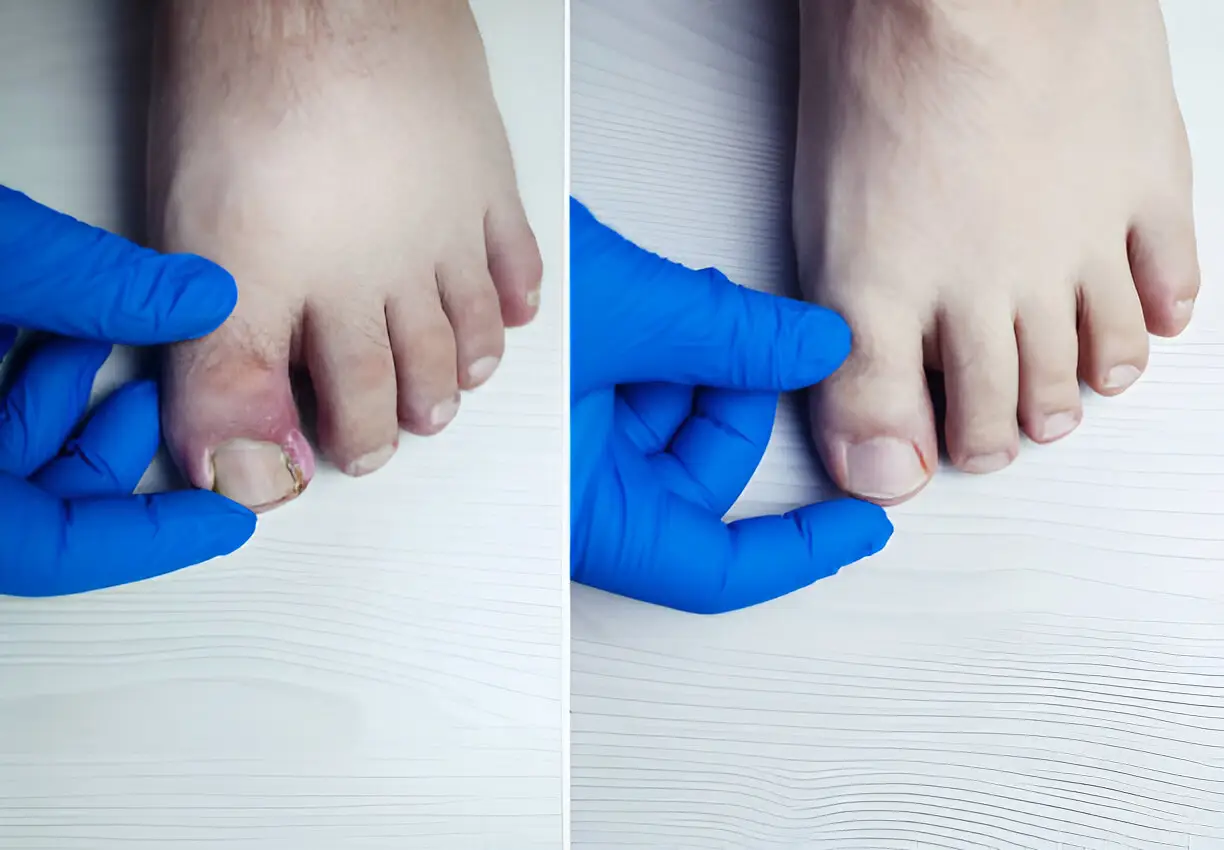
A plantar wart, also referred to as plantar verruca is a skin condition caused by the Human Papiloma Virus. This virus is very common, and presents on the feet. It infects the skin causing an abnormal reproduction of the skin’s appearance. Verrucas can be embarrassing for some however there is no need to be concerned as there are various treatments for Plantar verruca’s.

Verruca’s can be painful due to their raised appearance on the skin and are often surrounded by hyperkeratosis (callus). They often contain small black dots within them, these are small blood vessels. If you think you may have a verruca, it could be time to visit a Podiatrist.


What can Podiatrists do?

Podiatrists will assess the lesion to determine if it is verruca or something else like callus, or a foreign body. We will ask for a medical history so that we can determine the best treatment plan for you. Treatments can include debridement of the tissue and the use of chemicals such as silver nitrate, or salicylic acid. We can modify insoles and use padding to offload the Verruca so that you can stay active and pain free throughout treatment.  Verruca’s that don’t respond to these treatments may require further interventions such as Swift Microwave therapy or Faulkner’s needling.

What can you do?

Verruca is a virus that is transferable through direct contact or surfaces.  If you think you have a verruca it is important to wear socks around the house or public places to minimise the cross-contamination.

Rheumatoid Arthritis and your Feet​

Rheumatoid Arthritis and your Feet

Rheumatoid arthritis is a chronic autoimmune disease whereby your immune system begins to damage tissues such as cartilage and ligaments.   The condition affects the hands and feet most commonly. Females are 3 times more likely to develop this condition and the most common age category for developing it is between 40 and 60 years.

Symptoms can present as swelling and stiffness in the foot and ankle joints. Deformities such as bunions, hammer & Claw toes, pes planus (flat feet), can develop at a progressed stage of the condition.  These deformities can lead to increased pressure on aspects of the foot, causing callus buildup and possible breakdown of the tissues.

After a diagnosis of Rheumatoid Arthritis, treatment can commence in the form of medication known as disease modifying anti-rheumatic drugs (DMARDS) or non-steroidal anti-inflammatory drugs (NSAIDS) following assessment from a Rheumatologist.

A thorough assessment from our health professionals will determine the extent of deformity or progression of the disease. Treatments such as exercise therapy, Orthotic therapy and footwear modifications are excellent for slowing the progression and will often include softer materials that offload any deformities of the condition and to keep you comfortable and active.  

Why Do I Get Swollen Feet And Ankles?

Why Do I Get Swollen Feet And Ankles?

Swollen feet and ankles can be commonly associated with either oedema or an inflammatory response to injury or infection. Standing for too long or consuming excess salt through your diet can also cause excess fluid retention.

Pregnancy can cause the feet and ankles to swell due to hormonal changes, and increased pressure on veins due to extra weight in the uterus.

Acute (short term) and Chronic (long term) injuries can cause an inflammatory reaction, with an increased blood flow to the injured site. Common injuries such as ankle sprains, Achilles tendon tears, broken bones, and underlying conditions such as Diabetes, Gout, and heart failure can all cause swelling in the lower limb, foot, and ankle.

As Podiatrists we take a through history and perform a detailed assessment to determine the cause of your foot and ankle swelling.  We provide a progressive treatment plan specific to you.

The Wellness Place Bassendean Chiropractic Care And Pregnancy

Embracing Pregnancy: Your Chiropractic Guide to a Happy Pelvis

Hey there, soon-to-be moms! Pregnancy is a magical ride, but it does come with its set of changes, especially in the pelvis. If you’re a chiropractic patient, understanding these shifts is key. Today, we’re going to explore how your Sacroiliac (SI) joints and some hormonal magic play a starring role in this journey and why a bit of chiropractic care can make it all a smoother ride.


Meet Your Backbone: Sacroiliac (SI) Joints

Picture this: your SI joints, hanging out at the base of your spine between your hips, are like the unsung heroes of stability, supporting the weight of your trunk. Ladies, your naturally wider pelvis is built for the miracle of childbirth, thanks to these joints and the awesome team of muscles and ligaments backing them up.


Hormones Take Center Stage: Progesterone and Relaxin

Around weeks 10-12 of your pregnancy, cue the hormonal symphony featuring progesterone and relaxin. These rockstars help your body get stretchy, allowing your ligaments and smooth muscles to accommodate that adorable little human growing inside you. Cool, right? But here’s the twist – all this hormonal buzz makes your SI joints a bit more mobile, shaking up their stability compared to your pre-pregnancy days.


Muscles Get a Wake-Up Call: Adapting to the New Normal

Now, as those SI joints start grooving, your belly, glutes, and pelvic floor muscles get the memo: it’s time to step up their game for stability during your everyday moves. Enter chiropractors specializing in pregnancy care. They’re like your personal pregnancy support team, checking out how your pelvis moves, keeping tabs on muscle tension, and making sure everything stays on the stable side.


Everyday Woes: Dealing with Pelvic Changes

Let’s talk real stuff – the increased mobility of your SI joints might bring some not-so-fun conditions like pelvic girdle pain, lower backache, and other discomforts. But fear not! Chiropractors are on it, watching over you throughout your pregnancy journey, providing relief, and helping you navigate these changes like the superhero you are.


Power to You: Chiropractic Care for a Happy Pregnancy

To wrap it up, getting chiropractic care during pregnancy is like giving your pelvis a little extra love. Your chiropractor checks in on your pelvic party, managing the hormonal rollercoaster, stability challenges, and muscle demands. It’s all about making sure you cruise through pregnancy with comfort and confidence, ready for the incredible adventure of motherhood. You’ve got this!

FAQs:

Q1: How does pregnancy affect the stability of the SI joints?

  • During pregnancy, hormones like progesterone and relaxin increase the movement of the SI joints, potentially making them less stable than before.

Q2: Can chiropractic care help with common pregnancy-related pains?

  • Yes, chiropractors specializing in pregnancy care can assess and address conditions such as pelvic girdle pain, lower back pain, and others.

Q3: How often should I visit a chiropractor during pregnancy?

  • Regular check-ins, especially during the different trimesters, can provide ongoing relief and proactive guidance on managing pelvic changes.

Q4: Are there specific exercises to strengthen the pelvis during pregnancy?

  • Yes, chiropractors can recommend tailored exercises to strengthen the pelvis, contributing to a more comfortable pregnancy experience.

If you are going through pregnancy at the minute and want to know how one of our Chiropractors can help you out, give us a call on (08)93793838 or book an appointment here

Can a Chiropractor Help with Whiplash?

The short answer is yes. A chiropractor can help treat whiplash. Whiplash injuries are one of the most common presentations at The Wellness Place.

What is a whiplash injury?

A chiropractor can help treat a whiplash injury

A whiplash injury occurs when a force is applied to the neck involving a sudden forwards and backwards whipping movement such as during a car accident. This is commonly termed an acceleration-deceleration injury.

You may be surprised to know that a whiplash injury may also result from a blow to the head (such as sporting games) or from the head hitting the ground (such as falling from height or swings).

This causes damage to multiple structures in the neck resulting in pain and inflammation and associated with restricted movement due to muscle spasms around the neck as well as facet joints in the neck (the joints at the back of your neck) being jammed and inflamed. Ligaments, discs and nerves in your neck are equally affected and can contribute to your pain and disability.

Pain and dysfunction associated with whiplash injuries may last from a few weeks to months or even years. The pain can be quite difficult to pinpoint and not necessarily related to the speed of the collision but rather the person’s response just before and at the time of injury.

In addition to this, the person’s previous history, age, gender and general health can have direct and indirect influence on their presentation.

Why a whiplash injury assessment is the first step to successful recovery

While there are many whiplash treatment suggestions, your chiropractor will first conduct a thorough history to determine the mode of the injury. The direction of the collision (if a motor vehicle accident was the cause), your history, your presentation and your restricted movements. Nervous system involvement or muscle spasms need to be all assessed and taken into consideration.

Your muscular system is usually one of the first systems affected when you suffer from a whiplash injury. That is why muscle spasms leading to restriction of movement is a common presentation associated with whiplash.

Nervous system involvement usually is an indicative of the extent of damage with patients presenting with pins and needles, numbness or referred pain not to mention other unusual symptoms such as balance, vertigo or vision disturbances.

Following this, your chiropractor conducts a through neurological test and orthopaedic assessment. This at times can be difficult due to the degree of pain a patient can present with, however it is still quite important to determine the true cause of your pain.

Your chiropractor will then advise the best mode of action and therapy you need. In the initial phase, treatment is directed at reducing pain through gentle stretches, ice or heat and physiological therapeutics (including TENS therapy, Interferential electrical stimulation and ultrasound therapy). As your pain starts to subside, the chiropractor aims to improve the mobility of your neck by utilising gentle stretching, mobilisation and soft tissue therapy.

You may be referred for therapeutic massage to assist with your chiropractic treatment. Chiropractic adjustments can be utilised as your tolerance improves to correct faulty movement patterns.

How does a chiropractor treat whiplash?

Different chiropractic whiplash treatments are used by different health professionals. The type of technique utilised is usually determined by the patient’s presentation and preference.

Spinal manipulation techniques are found to be very effective at addressing the neck pain stemming from the spinal joints and are often a primary whiplash treatment option. Other manual therapy methods such as spinal decompression and traction and mobilisation are all shown to be highly effective ways to treat injured soft tissues.

Some chiropractors may use instrument assisted therapy such as an Activator instrument which has been received well by patients who prefer a gentle approach to their chiropractic care especially when they are so inflamed. Some chiropractors may perform gentle repeated strokes to the neck muscles in order to improve abnormal motion and excessive tension in the region.

Therapeutic massage aims to alleviate muscle tension. Chiropractic treatments can be complemented by an effective soft tissue therapy resulting in muscle relaxation. This can assist the patient’s speed of recovery.

Advice to address your poor posture can be invaluable when dealing with whiplash injury presentations.

FAQs about chiropractic treatment for whiplash injuries

What are some common whiplash symptoms?

While some patients may experience immediate aches and pain and associated symptoms such as shoulder pain, headaches, neck pain, or muscle pain, you may be surprised to know that many patients can experience pain in days and weeks after the accident. Pins and needles, numbness, referred pain to the face, jaw or arms as well as absurd neurological signs and symptoms such as blurred vision or vertigo have been reported. Some studies also have shown patients can experience dramatic symptomatology years after an accident. It is extremely important that you get checked even if you do not experience any pain or symptoms immediately after an accident as unfortunately, in many cases your symptoms may appear weeks or months later.

What is the best whiplash treatment?

A thorough examination determines what the best treatment for your condition may be. Depending on the extent of your injury, you may find yourself having muscles, joints, ligaments, muscles or other associated structures injured. Each of these require a delicate and specific approach and treatment plan.

You may require some imaging to be performed to ascertain the extent of your damage as well as your pre-existing condition. Depending on your presentation and assuming that there is no contraindication to conservative therapies, your Chiropractor and/or physiotherapist can guide you who would be best suited for your condition.

At The Wellness Place, we believe in a patient-centric environment. This means that your practitioner would unbiasedly inform you if another discipline can assist you better for your presentation and the stage of your care.

How long does whiplash take to heal?

Your pre-existing condition and your history as well as the extent of your injury and the damage you have sustained, would collectively determine how long it would take to heal. We usually find our patients responding really well to care within the first week or two. In this initial phase, the practitioner would mainly focus on reducing your pain and inflammation. This means that you would experience less symptomatology as well as enjoy better range of motion, sleep and functionality.

What is the fastest way to recover from whiplash?

Early intervention is crucial when it comes to managing whiplash. In most cases, the longer a patient delays presenting to care, the more the chance of their presentation getting more chronic and harder to treat.

As previously stated, many patients can experience none to very minor symptoms post an accident. However, In our experience the very same patient can present with complex and difficult presentation a few weeks later. This is the reason we recommend the early intervention to be a necessary aspect of your care plan.

Appropriate care plan with a thorough and detailed approach to your condition would have you back to normal in no time!

How do I realign my neck after whiplash?

Your chiropractor may recommend undertaking some X-ray studies post your accident. This allows your chiropractor to provide you with a more definitive diagnosis of your condition and ensure chiropractic care is a suitable therapy of choice.

Chiropractic adjustments in conjunction with therapeutic massage has been shown to be one of the most effective whiplash treatments. While some patients may prefer physiotherapy or occupational therapy treatment plans, your health professional would guide you what the best discipline would be for your condition and presentation.

Should I see a chiro or a physio for whiplash treatment?

At the Wellness Place, we operate on a patient centric mandate. We promise to provide our patients with a thorough assessment to allow your health professional advise you on the best approach to care.

In our experience, patients would simply like to see results and are open to honest and educated recommendations. We always offer the patient most suitable care for their presentation.

Occasionally, some patients have a preference of seeing a physio or chiro. All our practitioners are highly qualified, experienced and undertaken advanced and post graduate training. This means that we will be able to assist you in reaching your goals regardless of who you choose to see.

Why not book an appointment online and get a professional medical assessment and the right whiplash treatment plan, today?

What is Functional Capacity Assessment within my NDIS Plan?

Within your NDIS Plan you may see the term “functional capacity assessment” within the area of funding for Occupational Therapy

A functional capacity assessment is an all-encompassing assessment that addresses all areas of your life to identify strengths and barriers, areas requiring assistive technology or additional support or funding from NDIS and areas where your needs are adequately met.

Sounds a little intimidating? Don’t Worry!  That’s why we are here!!

A functional capacity assessment is designed to paint the most accurate picture of YOU and YOUR NEEDS to NDIS. 

For example, you could state to NDIS that you have some difficulty showering but can complete it, however by completing the showering tasks independently you are then confined to the couch to rest for an hour or so to recover. This might take time away from spending time with your family, or engaging in an activity that satisfies you mentally, physically or socially. A functional capacity assessment can breakdown the task and offer some valuable insights and recommendations surrounding potential equipment or work simplification strategies (maybe a shower stool, a handheld shower hose and a long handled sponge) to make the world of difference to completing the task.

This is one example of many.

As an Occupational Therapist I am equipped with the functional knowledge and experience to assist you to get the most out of your time, energy and assistance. With you being the expert in YOU and me being the expert in OT – we make a great team!

You may find it comforting to know that a functional capacity assessment is typically completed in the comfort of your home. In my experience, it can take approximately 2 hours and during the assessment, I will complete a thorough assessment including: 

  • what supports you currently have in place
  • activities of daily living such as cooking, cleaning, personal care, showering, toileting, work or parental responsibilities
  • how you access the areas in your home, the equipment you have in place and equipment you may also require 
  • community access, driving, public transport
  • managing your medication, finances and well-being
  • Memory, thinking, communication
  • Upper and lower limb function, mobility and transfers including falls

If you feel as though your needs are not being met within your NDIS plan and need assistance from an Occupational Therapist, speak with your Local area coordinator or Support coordinator about accessing a Functional Capacity Assessment.

Beth Wiggins is one of our Occupational Therapists at The Wellness Place and as part of her role within our team, she conducts Functional Capacity Assessments for patients with an NDIS plan.

What is an Occupational Therapist?

Occupational Therapy (OT) is the use of assessment and intervention to develop, recover or maintain the meaningful activities, roles, or occupations of individuals, groups or communities in every day life. This includes: taking care of oneself and others, working, volunteering, participating in hobbies and social or leisure activities. 

When should you see an OT?
If you are feeling unsafe in the home, including getting in and out of the shower, negotiating steps or getting in and out of your house. If you are having trouble getting in and out of bed or on and off chairs.
If you are falling frequently
If you are having difficulties completing your daily routine including meal preparation or personal care tasks due to pain, fatigue, limited mobility or general weakness.
If you are having difficulty with mobility and require a wheelchair or a powered mobility device.
If you are an NDIS participant wishing to get the most support out of your plan

Our Occupational Therapist Beth Wiggins can assess your house and give recommendations surrounding your areas of concern

Kickstart your Mindfulness Practice 

Our Naturopath – Meagan Grossman has put together a 3 part series to kickstart your mindfulness practice and this is the first instalment in the series.

Have you heard of journaling before? Perhaps it’s something you did when you were younger and grew out of. Maybe you’ve heard of it before but don’t know where to start. Or maybe this is the first you’ve heard of it. Either way, if you are looking at improving your feelings of stress and increasing mindfulness in your life, it is the perfect place to start. 

This is a three-part journey into the introduction of journaling techniques which aims to improve feelings of self-compassion, mindfulness, stress and even improve sleep quality and onset time. 

In the next blogpost, we are going to dive into self-reflection activities but before we get into that, we first have to understand ourselves and what better way to start than with understanding our core values! 

Values 

To understand yourself, you first need to understand your values for right now. Emphasis on right now is important as our values can change daily, as we get older, and as circumstances change. 

What are values?

Values are things in life that resonate with you. They summarise what makes up the person that you want to be. As we get caught up in life and stress, we sometimes lose sight of the person we are working towards embodying and can end up acting out of emotion and impulse more than we would like. When we have a clear summary of our values, we can actively make choices that align with them which puts us back on track to hitting our goals. 

Your activities:

  1. Write down a list of up to 10 values that apply to you. See the image below for a list of examples. 
  2. Once you’ve got your 10, list them in order of importance. 

Keep them handy in a notebook or in your phone. We will be building on this in the next blogpost.

Table

Description automatically generated with medium confidence

What does a Podiatrist do?

It is a common question and often a point of confusion as to what a podiatrist does, as far as treatment and scope of practice.

Most of our time is spent assessing, diagnosing, and treating lower limb conditions. In terms of our training most undergraduate programs are 4 years of full-time university with a focus on biochemistry, human biomechanics, anatomy and physiology, in addition to podiatry specific clinical practice and associated study.

We treat people of all ages, and a myriad of conditions. Basically anyone with feet! And this is what makes a day in the life of a podiatrist so diverse. In a single day, you could treat a person for heel pain, whilst later addressing ingrown toenails, providing intervention for an in-toeing child and screening for neuropathy and circulation in a diabetic patient.

No issue is too big or too small .

Below is a broad list of categories that a podiatrist treats.

Skin and nail care: When it comes to making sure your nails are healthy or free of fungus, corns/hard skin and callus are removed safely and painless, and addressing ingrown toenails, we are the people to see.

Orthotic therapy: Biomechanical and postural complaints such as flat or very high arched feet, in addition to optimising foot function can be addressed with orthotic therapy in the form of custom or pre-made dependant on the circumstances. They can be a very useful tool to unload injured tissues during an acute or chronic injury, or a way to reduce muscular and joint strain in active individuals with jobs or activities that place high demands on the lower limb.

Diabetes screening and management: Podiatrists play a vital role in screening for the effects of diabetes such as neuropathy and impaired circulation. Due to the increasing epidemic of diabetes and the burden it places of the health system, it is crucial to prevent complications related to diabetes. We ensure diabetic’s feet are in good condition to ensure long lasting mobility and prevent hospitalisations.

Footwear: A podiatrist is well positioned to provide advice on appropriate footwear for an individual based on their unique biomechanics, activities and occupation. Aside from the dynamic function of the foot, the size and shape of feet mean considerations for length and width and the shape of the outsole are important considerations. We have regular contact with leading footwear companies on the latest innovations and ranges that can suit a person’s foot, get the right fit and help with the particular issue, rather than worsen it.

Running and Gait Analysis: From simple gait retraining and analysis, it can help paint the overall picture of why someone might develop lower limb pain. It can also be useful to have a trained eye to assess running technique to optimise efficiency, reduce injury and facilitate improved performance.

Paediatric issues: We commonly see young children for postural concerns, ingrown nails, warts/verruca and in-toeing. Often a parent wants to be advised if their child is progressing and developing with a normal range and we can provide assessment to decide whether intervention is necessary. 

Aches and pains: If that niggling knee, hip or back pain is keeping you from staying active, we can assess if their is a contributing factor by evaluating your movement patterns, limb-length and gait cycle. We can help with a combination of assessment, and effective treatments. Life is too short to be in pain!

Reformer Pilates and Mat Pilates at The Wellness Place

Main Benefits of Pilates

The primary benefits of Pilates are core muscle strengthening and posture correction. Here are some specific benefits you may experience:

  • Increased strength, muscular control, flexibility, and mobility
  • Improved posture and balanced muscles
  • Improved joint health and bone density
  • improved balance
  • Rehabilitation for back pain and extremity pain
  • Improved pelvic health
  • Decreased pregnancy-related pain and strengthened core postpartum

Postnatal Classes Offered

One of the best ways to help your body return to its pre-pregnancy state is through Pilates. Some of the benefits include strengthening the pelvic floor, abdominal. low back muscles and leg and arm strength. Helping new mums regain their fitness and energy levels and help build the strength to carry bub!

Issues that Pilates can help with:

post and pre-natal conditions, lower back pain, poor posture, neck, shoulder and Upper back pain, extremity injuries, balance issues.

Pilates strengthens the body to prevent recurring issues from coming back.

How to Prepare

Please dress in comfortable workout clothes and bring a drink bottle. The Wellness Place provides mats, however you are more than welcome to bring your own mat if you prefer. For your first class, you will need to arrive 15 minutes early to fill out additional paperwork. This will also allow time for you to chat with your instructor if you have any additional questions.

Your instructor will provide detailed instruction for all movements as well as individualised modifications if required. The most important element is that you are having fun. The next day you might feel muscles that you have never felt before.

How Are Yoga and Pilates Different?

While yoga and Pilates are both fantastic forms of exercise, there are some primary differences. Pilates focuses on increasing core strength and endurance and improving posture. Yoga focuses on stress reduction, meditation, and flexibility.

One-on-One Clinical Pilates

We are pleased to offer one-on-one clinical Pilates which is a form of physical exercise that focuses on posture, core stability, balance, control, strength, flexibility, and breathing. This type of Pilates is more custom-tailored to treat your symptoms than regular Pilates. With the one-on-one classes, you get the individual attention that’s more based on your specific needs and goals.


Whether you’re seeking to increase muscle strength, improve flexibility or just boost your overall wellbeing, you should consider Pilates at our practice. Pilates connects the mind and body through precise movements and physical control. Each movement is designed to lengthen, strengthen, and stretch muscle groups through non-impact movements.

Pilates is suitable for almost all demographics including teenagers, athletes, pregnant women, and the elderly. If you’re new to Pilates there’s nothing to feel nervous about. The most important thing is to have fun!