Sports Injury Treatment Bassendean: How Our Multidisciplinary Team Gets You Back in the Game Faster
You trained for months. You were hitting personal bests. Then one awkward landing, one sharp pivot, one overuse niggle you ignored — and suddenly you’re on the sidelines, googling “sports injury physio Bassendean” and wondering how long until you can run again.
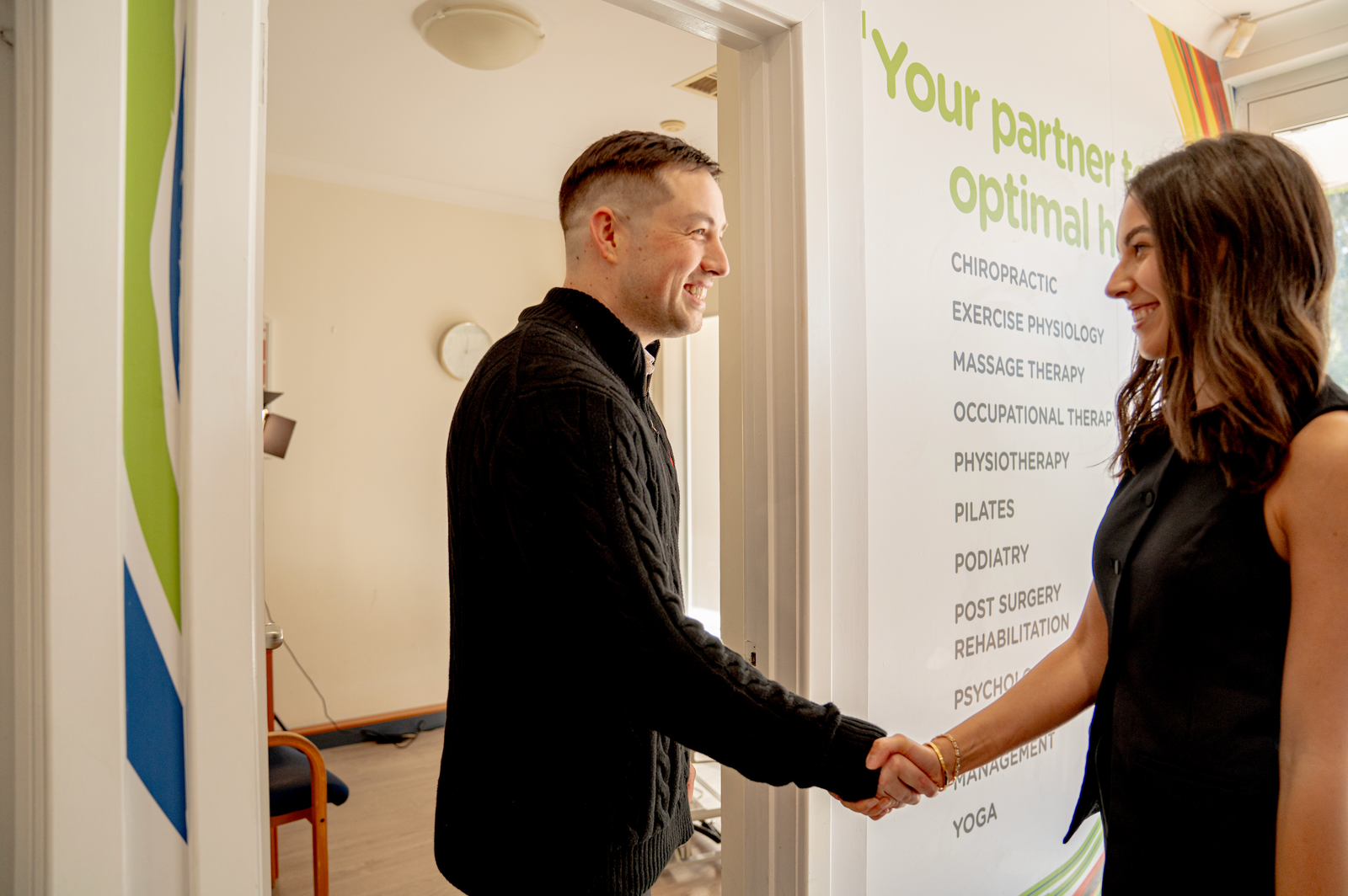
The answer depends on two things: the injury itself, and — critically — the team behind your recovery. At The Wellness Place (TWP) in Bassendean, sports injuries aren’t treated through a single lens. They’re managed by a multidisciplinary team of physiotherapists, sports podiatrists, chiropractors, exercise physiologists, and remedial massage therapists — all working together on one shared goal: getting you back to your sport, stronger than before.

Why Single-Discipline Treatment Often Falls Short
Imagine a runner with recurrent shin pain. A physio-only approach might focus on strength and load management — which is essential. But what about the runner’s foot mechanics? A podiatrist identifies overpronation that’s overloading the posterior tibialis tendon. What about their spinal alignment affecting hip drop on the painful side? A chiropractor addresses the pelvic asymmetry. Meanwhile, an exercise physiologist builds a progressive return-to-run program that the physio’s rehab alone didn’t cover.
None of these disciplines is “wrong” — but each sees only part of the picture. Research consistently shows that multidisciplinary rehabilitation produces better outcomes than single-modality care for sports injuries, particularly for complex or recurrent cases (Dhillon et al., 2017). At TWP, this isn’t a referral merry-go-round — it’s a coordinated team under one roof at 103 Old Perth Road.
Common Sports Injuries We Treat in Bassendean
Perth’s active lifestyle — from weekend footy at Bassendean Oval, netball at the recreation centre, to running along the Swan River — produces predictable injury patterns. Here are the most common we see at The Wellness Place:
Ankle Sprains and Chronic Ankle Instability
The classic “rolled ankle” in basketball, netball, or soccer. While most grade I-II sprains heal in 4-6 weeks, up to 40% of people develop chronic ankle instability (Doherty et al., 2014). Our physiotherapists address proprioception and strength deficits, while our podiatrists assess biomechanical contributors and may prescribe orthotics or footwear changes to prevent recurrence.
Knee Injuries: ACL, Meniscus, and Patellofemoral Pain
Knee injuries range from acute trauma (ACL tears in football, meniscus damage from twisting) to overuse syndromes like patellofemoral pain in runners. Surgery may be required for complete ACL ruptures, but prehabilitation and post-operative rehabilitation are where outcomes are won or lost. Our physiotherapists guide rehab phases, exercise physiologists build strength programs, and podiatrists correct lower-limb biomechanics that contributed to the injury.
Shoulder Injuries in Overhead Athletes
Swimmers, tennis players, cricketers, and CrossFit athletes all place extreme demands on the shoulder. Rotator cuff tendinopathy, impingement, and labral tears are common. Chiropractic care addresses thoracic spine mobility — which directly affects shoulder range — while physiotherapy targets rotator cuff strength and scapular control. Combined, these approaches address the kinetic chain rather than just the painful structure.
Hamstring Strains and Lower Limb Overuse
Hamstring injuries are the most common soft tissue injury in sprinting sports, with a recurrence rate of 12-31% (Petersen et al., 2011). Our podiatrists examine running gait and foot strike patterns; physiotherapists address eccentric strength deficits and neuromuscular control; remedial massage therapists manage scar tissue and muscle tone through the recovery phases.
The Four Phases of Sports Injury Recovery
Modern sports rehabilitation follows a staged, criteria-based model — not a calendar-based one. You progress when your body is ready, not when a fixed number of weeks have passed.
Phase 1: Acute Management (Days 0-7)
Protection, optimal loading, ice, compression, elevation (POLICE principle). Early diagnosis is critical — our physiotherapists and chiropractors provide hands-on assessment to rule out fractures, complete ruptures, or surgical cases. Pain management and inflammation control set the foundation. Remedial massage can reduce protective muscle spasm in surrounding tissues.
Phase 2: Recovery and Restoration (Weeks 1-6)
Range of motion exercises, gentle strengthening, and neuromuscular re-education. This is where the multidisciplinary advantage shines: your physio progresses your rehab exercises, your chiropractor ensures joint mobility isn’t compromised by compensatory patterns, and your exercise physiologist begins introducing controlled load in ways that don’t aggravate the injury.
Phase 3: Sport-Specific Retraining (Weeks 4-12)
Movement patterns that mimic your sport — cutting drills, plyometrics, throwing progressions, running gait retraining. Our exercise physiologists design programs that bridge the gap between “rehabbed” and “game-ready.” Podiatrists ensure foot and ankle mechanics aren’t creating compensatory load further up the chain.
Phase 4: Return to Sport (Variable)
You’re running, jumping, and moving well — but are you ready for competition? Return-to-sport decisions should be criteria-based: strength symmetry within 10% of the uninjured side, psychological readiness, sport-specific testing. Rushing this phase is the #1 cause of re-injury. Our team uses objective testing — not guesswork — to clear you for return.
What Makes The Wellness Place Different
- One location, one team: No driving between clinics for physio, podiatry, and chiro appointments. Your entire rehab team is at 103 Old Perth Road, Bassendean.
- Shared clinical notes: Your physio knows what your podiatrist found. Your chiro knows what exercises your EP has programmed. No contradictory advice.
- Biomechanics expertise: Our podiatrists (led by Dr Aaron Gregory) use 3D gait analysis and custom orthotics to address the root cause of lower-limb overuse injuries.
- Hands-on + exercise-based: Manual therapy for pain relief and joint mobility, combined with progressive exercise programs that build resilience — not just temporary relief.
- Recovery modalities: Remedial massage, clinical Pilates, infrared sauna, ice bath, and compression therapy support tissue healing and reduce delayed-onset muscle soreness between rehab sessions.
Realistic Recovery Timelines
Every injury is different, but here are evidence-based timelines for common sports injuries when managed with structured multidisciplinary rehab:
- Grade I-II ankle sprain: 2-6 weeks to activity, 6-8 weeks to full sport
- Hamstring strain (grade I-II): 3-8 weeks to full sprinting
- Patellofemoral pain: 6-12 weeks of progressive loading
- Rotator cuff tendinopathy: 8-16 weeks for overhead athletes
- ACL reconstruction: 9-12 months to full competition clearance
- Shin splints / medial tibial stress syndrome: 4-8 weeks with correct load management and biomechanical correction
Note: these are averages for compliant patients with no complications. Your treating practitioner will give you a personalised estimate at your initial assessment.
Don’t Wait Until It’s Worse
The single biggest mistake athletes make is delaying treatment. A niggle becomes a strain. A strain becomes a tear. A tear becomes surgery. Early intervention shortens recovery time, reduces costs, and — most importantly — gets you back to the sport you love sooner.
If you’re dealing with a sports injury in Bassendean, Guildford, Bayswater, or Perth’s eastern suburbs, our multidisciplinary team is ready to help. Book an initial assessment with our physiotherapy or sports podiatry team today.
The Wellness Place
103 Old Perth Road, Bassendean WA 6054
Phone: (08) 9379 3838
thewellnessplace.com.au — Online bookings available
References
- Dhillon, H., Dhillon, S., and Dhillon, M. S. (2017). Current concepts in sports injury rehabilitation. Indian Journal of Orthopaedics, 51(5), 529-536.
- Doherty, C., Delahunt, E., Caulfield, B., Hertel, J., Ryan, J., and Bleakley, C. (2014). The incidence and prevalence of ankle sprain injury: a systematic review and meta-analysis of prospective epidemiological studies. Sports Medicine, 44(1), 123-140.
- Petersen, J., Thorborg, K., Nielsen, M. B., Budtz-Jorgensen, E., and Holmich, P. (2011). Preventive effect of eccentric training on acute hamstring injuries in men’s soccer. The American Journal of Sports Medicine, 39(11), 2296-2303.