
Moving With Chronic Pain: Breaking the Boom-and-Bust Cycle
Moving With Chronic Pain: Breaking the Boom-and-Bust Cycle
Most people with persistent pain don’t have a movement problem. They have a shape problem. A chronic pain exercise program doesn’t ask for more effort: it spreads the same effort differently, and that’s what breaks the cycle.
The boom-and-bust cycle, and how to spot it
Saturday is a good day. The ache sits in the background, so you catch up on everything you’ve been putting off: two hours in the garden, the shopping, the vacuuming, then a walk because the weather’s decent.
By Sunday night you can feel it building.
Monday and Tuesday you’re flat. The pain is louder than it’s been in weeks, so you cancel plans, take a day off work, and rest, because that’s all that settles it.
Then Wednesday arrives, the pain eases, and you’re frightened to move in case it returns.
That loop is boom-and-bust, and it’s common in Bassendean. Exercise physiologists describe the two ends of it as persisters and avoiders: people who push on until something gives, and people who pull back until their tolerance quietly shrinks.
Plenty of us are both in the same month.
The tell-tale sign isn’t your worst day. It’s the shape of your week: three loud days, four quiet ones, and no two weeks that look alike.
What a paced week actually looks like
Pacing means setting your load in advance, based on your worst recent day rather than your best one. A chronic pain exercise program works the same way, and here’s a real week for someone rebuilding after a long flare-up of low back pain.
- Monday: 20 minutes of walking on flat ground, split into two 10-minute blocks.
- Tuesday: 15 minutes of strength work at home: sit-to-stands, band rows and calf raises, two easy sets each.
- Wednesday: a 10-minute easy walk and nothing else.
- Thursday: Monday’s walk again, same route, same duration.
- Friday: Tuesday’s strength session again.
- Saturday: something you’d do anyway, like a swim or a walk with a friend at talking pace.
- Sunday: rest.
That’s about 90 minutes of deliberate movement a week, unchanged for a fortnight.
A bad day doesn’t cancel the week. It shrinks it. If Monday’s walk leaves you sore, Tuesday’s strength drops to one set and Thursday’s walk drops to 10 minutes, then Friday returns to the original plan.
You don’t restart from zero.
| Boom week | Paced week (same total effort, different shape) |
|---|---|
| Monday: two hours in the garden | Monday: 20 minutes of walking, in two 10-minute blocks |
| Tuesday and Wednesday: pain high, plans cancelled | Tuesday: 15 minutes of strength work; Wednesday: a 10-minute walk |
| Thursday: feeling better, so a 70-minute walk | Thursday: 20 minutes, same route as Monday |
| Friday: strength plus the housework you skipped | Friday: 15 minutes of strength, same sets |
| Weekend: three hours on your feet catching up | Weekend: one swim or a social walk, then rest |
| Sunday night: flare-up, and the week starts again | Sunday night: much the same as last Sunday |
Flare-ups: the first 48 hours
Flare-ups happen even when you’ve done everything right. They hurt, and they aren’t proof of damage. For the first two days:
- Keep moving at about half your usual dose, so a 20-minute walk becomes 10.
- Change one thing, not five. Drop the strength work and keep the walking.
- Use heat or cold, whichever has helped before.
- Protect your sleep. Two broken nights make most flares look worse than they are.
- Write down what happened in the 48 hours beforehand, including sleep and stress.
What not to do matters just as much. Don’t stop completely, because a week of full rest costs fitness and confidence and makes the return harder than the flare itself. Don’t bolt on a brand new stretching routine mid-flare, since new is the last thing an irritated system needs. And don’t hunt for the one movement that caused it, because most flares are three or four things stacked together.
Building back without losing the gains
Once you’ve strung together a fortnight of paced weeks without a spike, the load goes up. Usually by around 10%: a 20-minute walk becomes 22, a set of eight sit-to-stands becomes nine. That’s graded exercise in practice, small and repeatable rather than heroic.
The plan should shift after a good fortnight, and that’s deliberate. A chronic pain exercise program that never moves up isn’t careful, it’s stalled, and months of stalling is how deconditioning creeps in.
It doesn’t always go to plan, and we’d rather say that plainly. A deadline, a head cold or a run of broken sleep can wipe out your good fortnight. When that happens we hold the current level instead of pushing, and holding counts as a result.
How we measure progress that isn’t pain
Pain scores move slowly and they’re a poor scoreboard on their own. So we track what shifts faster:
- How many nights this week you slept through.
- How far you walked before you stopped, measured in minutes.
- How confident you felt before an activity, rated out of 10.
- Whether a specific activity is back: the walk from your front door to Bassendean Train Station, or a full round of golf, or a shift at work without lying down at lunch.
Why measure anything that isn’t pain? Because these are the numbers that tell you the plan is working while the pain is still making up its mind, and the numbers you can influence this week.
What to expect at your first appointment in Bassendean
Your first session runs about 50 minutes. We take a full history, ask what you’ve already tried, then look at your normal week, including work, sleep and the tasks you’ve stopped doing.
Then we test. How you stand up from a chair, how far you can walk in six minutes, and what load you can repeat tomorrow without paying for it.
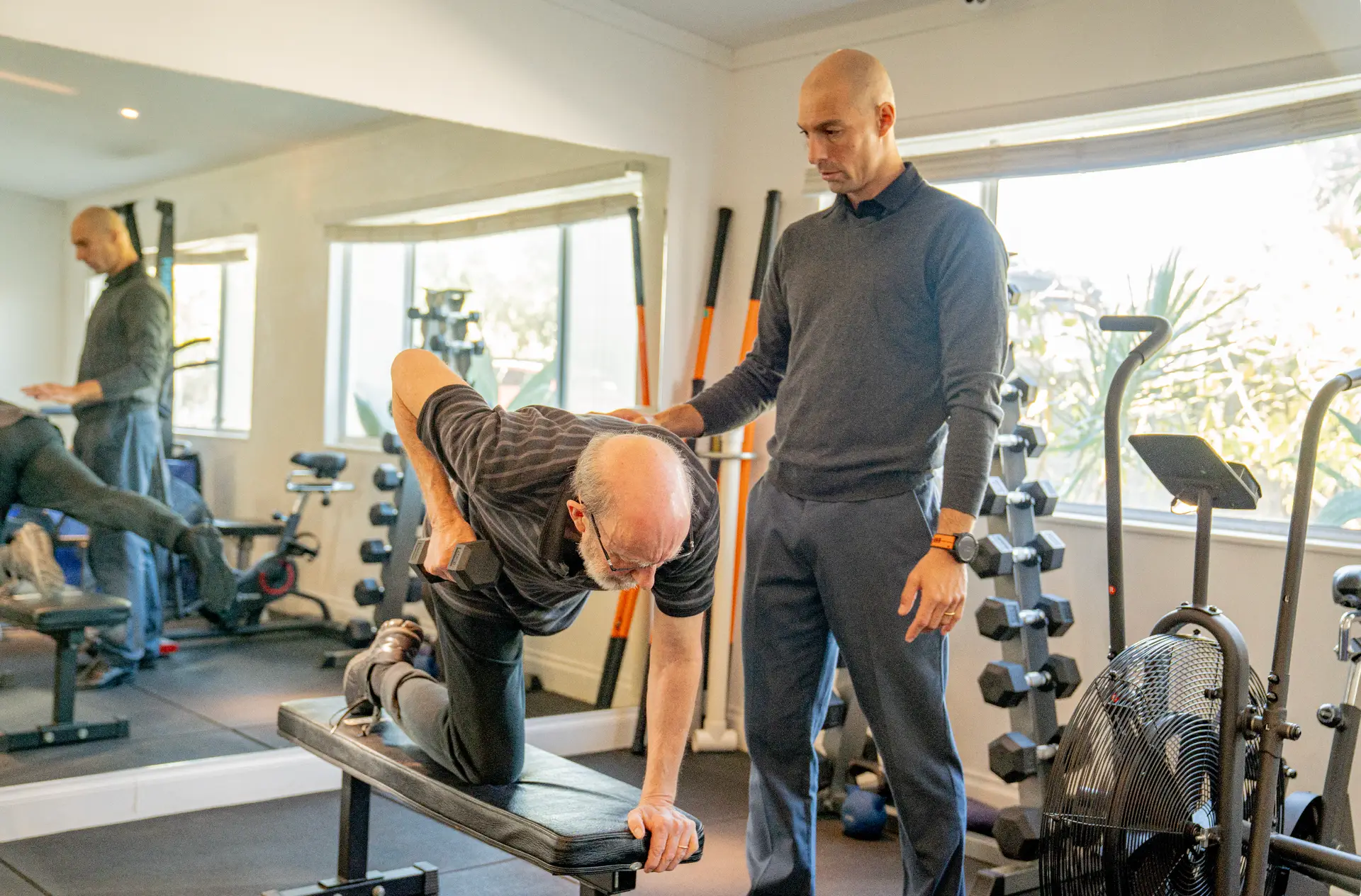
You leave with a written two-week plan: three or four activities with exact durations, plus a review a fortnight later. It won’t be a generic chronic pain exercise program; it’ll be built around your week. Learn more about exercise physiology at The Wellness Place.
If your weeks look more like spikes than a line, that’s worth fixing. Call The Wellness Place in Bassendean on (08) 9379 3838, or book online, and we’ll build the paced version with you.
References for building a chronic pain exercise program
Exercise Right on persister and avoider patterns: Practical advice for exercising with chronic pain.
PainAustralia on pacing daily activities and tailored exercise: Modern Pain Care.
healthdirect on funded management options, including movement: Options for managing chronic pain.